From Digital Reach to Physical Presence: Why the Next Generation of Platforms Needs Real-World Infrastructure
Digital platforms can create global reach almost instantly. But lasting value requires something more: trusted local partners, physical locations, real communities and a clear path from online discovery to real-world participation.
Digital platforms have become exceptionally effective at attracting attention, connecting users and distributing information at global scale.
But reach is not the same as impact.
A platform may have millions of views, thousands of registrations and an active online community while still producing limited real-world value. The critical question is no longer simply how many people a platform can reach. It is whether that digital activity can lead to trusted relationships, meaningful participation and measurable outcomes beyond the screen.
This is why the next generation of successful platforms will not be purely digital.
They will combine intelligent technology with physical infrastructure, local partners and real-world experiences.
What Is Real-World Digital Infrastructure?
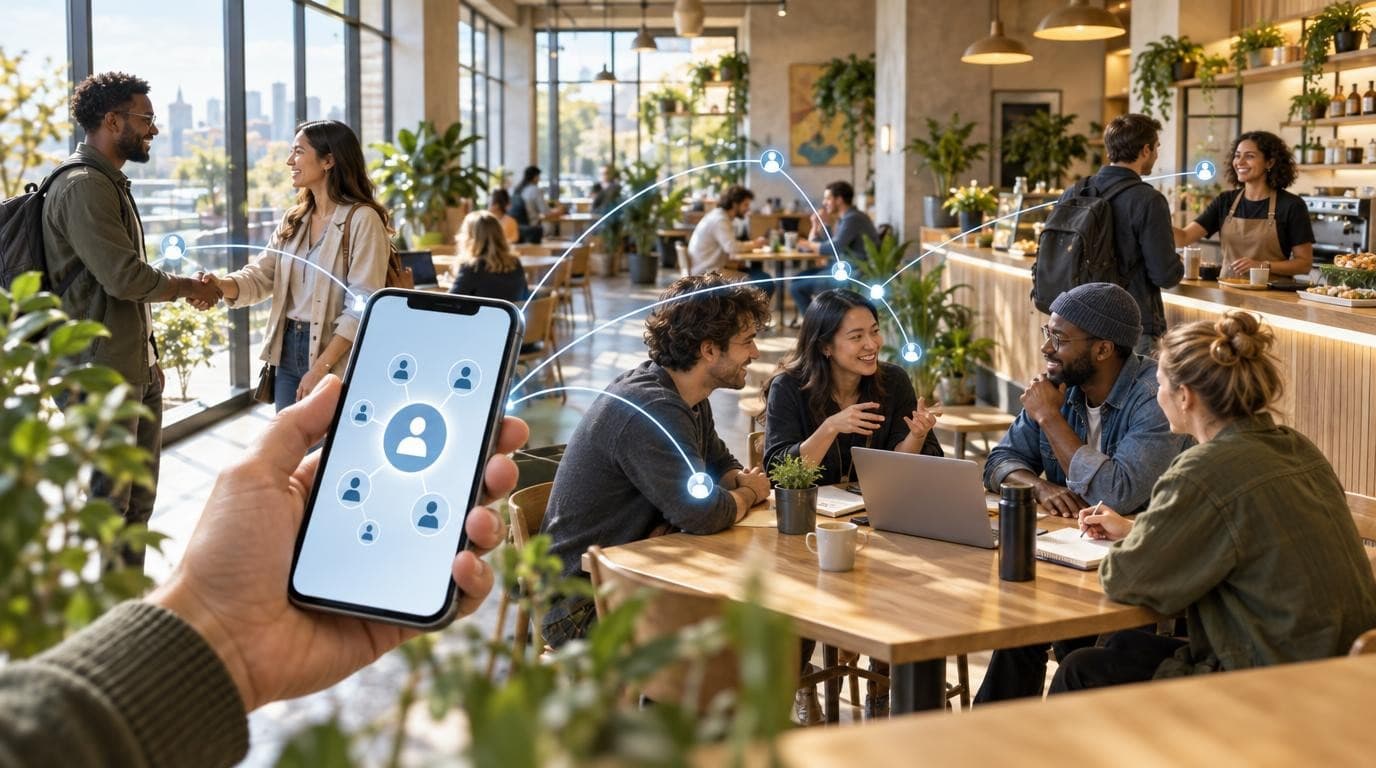
Real-world digital infrastructure is a network of physical locations, local partners, community leaders and structured experiences connected through one digital platform.
It creates a bridge between online discovery and offline participation.
• partner venues
• local activation points
• community events
• educational sessions
• product demonstrations
• onboarding locations
• certified local representatives
• trusted environments where users can meet, learn or participate
The digital platform provides intelligence, coordination, communication and scale. The physical network provides trust, presence, experience and local relevance.
Together, they create something significantly stronger than either layer could create independently.
Digital Platforms Solved Reach - But Not Trust
The internet removed many traditional barriers to growth.
A technology company can now reach users in dozens of countries without opening offices in every market. Communities can form rapidly. New products can be introduced globally. Information can move almost instantly.
However, the same speed that creates reach can also weaken trust.
Users increasingly encounter platforms, advertisements, communities and opportunities that exist entirely online. They may understand what a platform claims to offer without ever experiencing the people, culture or operational reality behind it.
Physical presence changes that relationship.
When users can visit a trusted location, meet other participants, attend an event or interact with a recognized local partner, the platform becomes more tangible. It moves from being something they have seen online to something they have experienced personally.
This does not replace digital technology. It completes it.
Communities Need Places to Come Alive
Online communities can create awareness and maintain communication, but meaningful communities usually require more than digital interaction.
People build stronger relationships through shared experiences.
They meet. They exchange ideas. They observe how others participate. They develop confidence through direct interaction. They begin to see themselves as part of something larger than a website, application or social-media channel.
Physical infrastructure gives digital communities a place to become real.
A cafe, restaurant, hotel, club, coworking space or other partner venue can become more than a commercial location. When connected to the right platform and operating model, it can become a local entry point into a wider ecosystem.
The venue gains access to new audiences, programming and visibility. The platform gains trusted local presence. The community gains a recognizable place to connect.
This creates a distributed model of growth: global technology supported by local participation.
The Online-to-Offline Loop
The strongest platform models increasingly create a continuous connection between digital and physical activity.
A user may first discover a platform through content, a referral or a digital campaign. The platform then helps that person understand the opportunity, complete an initial assessment or join a community.
The next step happens in the real world.
The user attends an event, visits a partner location, joins a local activity or meets other participants. That experience then creates new content, referrals, relationships and platform activity.
Digital discovery → Local participation → Real world experience → Community growth → New digital activity
This is not simply a marketing funnel. It is an operating loop.
Every physical interaction can strengthen the digital ecosystem, while every digital interaction can create new activity for local partners.
Physical Infrastructure Does Not Have to Mean Heavy Infrastructure
Building a physical network once required significant capital, long-term leases and centralized operations.
That is no longer always necessary.
Modern ecosystems can develop physical presence through structured partnerships with existing businesses and venues. Instead of owning every location, the platform provides the technology, brand architecture, community, tools and operating standards that connect independent partners into one coordinated network.
This creates a more flexible and scalable model.
Local partners retain their existing business while gaining an additional role within the ecosystem. The platform expands without carrying the full cost of a traditional location-based rollout. Communities receive access to authentic local spaces rather than standardized corporate branches.
The result is a network that can grow city by city while remaining connected to a common digital system.
Why Local Partners Matter
Technology can automate communication, recommendations, transactions and coordination. It cannot fully replace local understanding.
Every city has its own culture, behavior, social dynamics and trusted networks. A model that works in one market may need different activation methods in another.
Local partners provide this intelligence.
They understand their communities. They know which formats create participation, which locations feel credible and how people prefer to engage. They can transform a global platform into something locally relevant.
This is especially important for platforms connected to human relationships, lifestyle, entrepreneurship, education or community participation. In these areas, trust is rarely created through technology alone.
The strongest model combines global systems with local human leadership.
Artificial Intelligence Also Benefits From Real-World Feedback
Artificial intelligence becomes more useful when it can learn from meaningful outcomes rather than clicks alone.
Purely digital systems often optimize around visible online behavior: views, time spent, messages, reactions or repeated platform use. These metrics are easy to collect, but they do not always reveal whether the platform created genuine value.
Real-world participation introduces a deeper feedback layer.
Did people attend? Did they connect? Did they return? Did the experience create a meaningful relationship, partnership or opportunity? Did a local community become stronger?
These outcomes can help platforms move beyond engagement optimization toward outcome optimization.
That distinction will become increasingly important as users demand technology that improves their lives rather than merely consuming more of their attention.
Daty.ai as an Emerging Online-to-Offline Model
Within the ZeeQuest ecosystem, Daty.ai provides an early example of how digital intelligence and physical infrastructure can work together.
The digital layer is designed to support better relationship decisions through compatibility intelligence, timing analysis and personalized interpretation.
The physical layer introduces Pioneer Hubs, local communities and structured events where digital connections can progress into real-world interaction.
This is strategically important because human connection cannot be completed entirely through an application.
Technology can provide insight. It can identify patterns, support decisions and reduce uncertainty. But relationships ultimately develop between people, in real environments and through shared experiences.
The purpose of the physical layer is therefore not to compete with the technology. It is to allow the technology to achieve its intended outcome.
A Wider ZeeQuest Principle
The same principle extends beyond relationship technology.
• Sustainable agriculture requires physical production systems.
• Industrial innovation requires machinery, manufacturing and supply-chain integration.
• Entrepreneur ecosystems require people, knowledge, local leadership and access points.
• Capital infrastructure requires governance, professional execution and credible market connections.
Across every sector, technology becomes more valuable when it is connected to the infrastructure required for deployment.
This is central to the ZeeQuest model.
A venture is not complete when the technology exists. It becomes meaningful when the technology, operating model, community, capital and real-world delivery system begin working together.
The Future Is Neither Online Nor Offline
The distinction between digital and physical business models is becoming outdated.
The next generation of platforms will operate across both environments simultaneously.
They will use technology to create reach, intelligence and coordination. They will use physical networks to create trust, experience and local execution. Communities will move continuously between the two layers.
The companies that understand this shift will not simply build larger online audiences.
They will build living ecosystems capable of producing measurable activity in the real world.
Digital reach may create the opportunity.
Physical infrastructure is what makes that opportunity real.
Frequently Asked Questions
What is real-world digital infrastructure?
Real-world digital infrastructure connects a digital platform with physical locations, local partners, community leaders and structured offline experiences. It allows online activity to progress into real-world participation.
Why do digital platforms need physical locations?
Physical locations can strengthen trust, community participation and local relevance. They also give users a place to experience the platform beyond its website or application.
Does a platform need to own its physical locations?
Not necessarily. Platforms can build distributed infrastructure through partnerships with existing venues and businesses operating under shared standards, technology and brand architecture.
What is an online-to-offline platform?
An online-to-offline platform uses digital discovery, intelligence and coordination to generate participation or outcomes in physical environments.
How does Daty.ai connect digital and physical experiences?
Daty.ai combines a digital relationship-intelligence platform with Pioneer Hubs, community activations and real-world events designed to help online discovery progress toward meaningful human interaction.