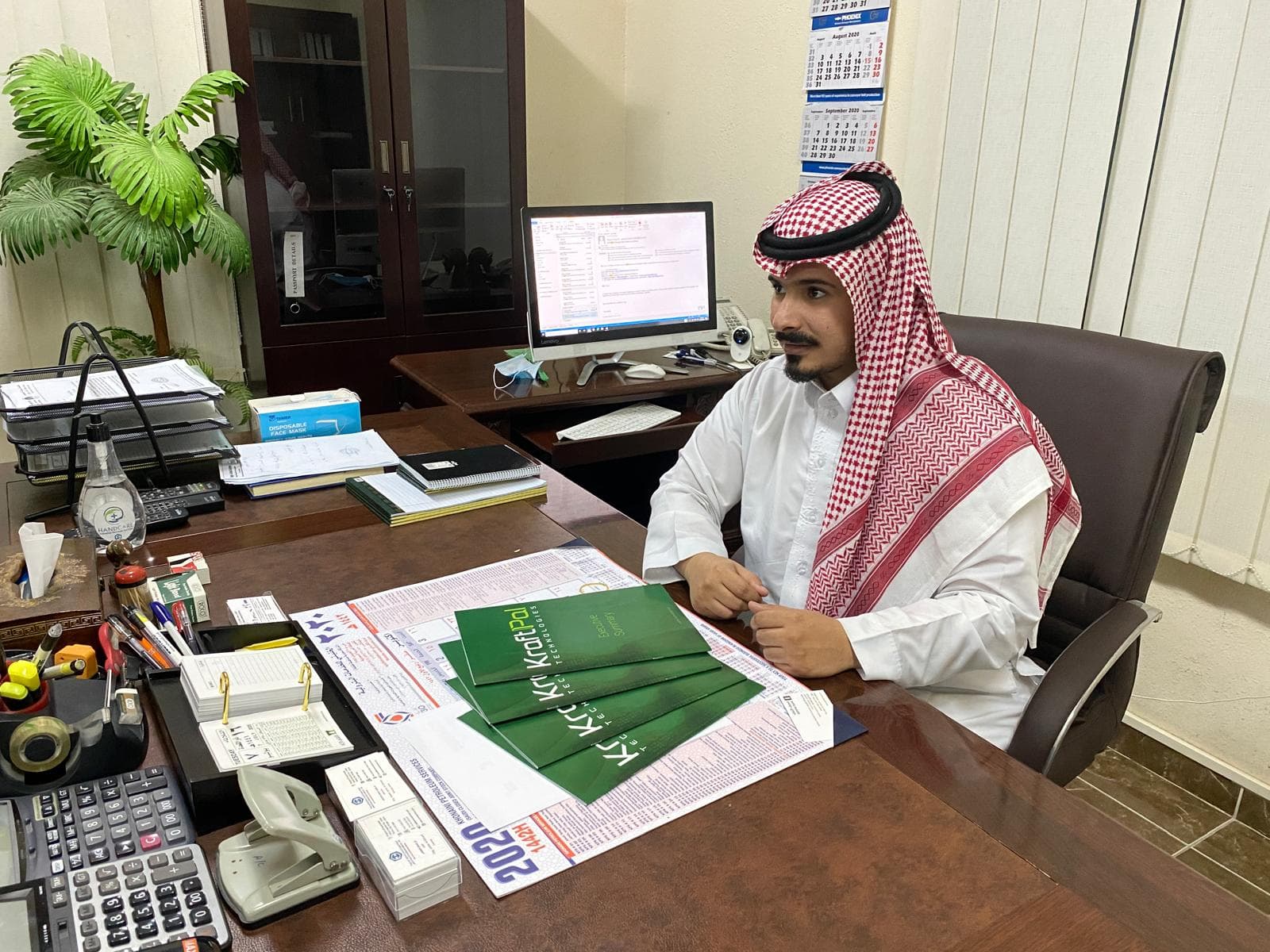
KraftPal: The Economics and Structure of Local Industrial Licensing
How technology licensing, regional production and strategic partnerships can transform an industrial innovation into a scalable manufacturing business.
The Challenge of Scaling Industrial Innovation
Industrial innovation faces a challenge that is fundamentally different from the one encountered by many digital businesses.
A digital product can sometimes reach new markets through software distribution, cloud infrastructure and online customer acquisition.
An industrial product must also address the physical realities of manufacturing, material supply, transportation, production capacity, quality control and customer delivery.
These requirements make industrial expansion capital-intensive and operationally demanding.
But they also create an opportunity for a different approach to scaling.
Rather than concentrating all manufacturing in one location and distributing finished products across distant markets, certain industrial technologies can be commercialized through geographically structured licensing and local production.
The central idea is straightforward: develop and protect the technology, then establish production capabilities close to the customers who need the product.
KraftPal provides a useful example of how this approach can be evaluated in practice.
Through its involvement with KraftPal, ZeeQuest Technologies is working on commercial-development opportunities that connect industrial technology with regional manufacturing, customer demand, operating partners and investment structures.
1. Why Local Manufacturing Can Change Industrial Economics
The economics of industrial production depend on more than the manufacturing cost of an individual product.
Transportation, storage, delivery reliability, production utilization and working capital can materially affect the competitiveness of a manufacturing operation.
This is particularly relevant for products used in large quantities across logistics and supply chains.
A pallet, for example, is not simply a manufactured unit. It is part of a larger operating system involving packaging, warehousing, transportation and distribution.
For customers using substantial volumes, the commercial decision may depend on total delivered cost, product performance, supply reliability and integration into existing operations.
Local manufacturing can offer several potential advantages.
Reduced transportation exposure: Shorter delivery distances may lower freight costs and associated logistical complexity.
Improved supply responsiveness: Regional production can make it easier to coordinate deliveries with customer demand.
Customer-specific production planning: Local facilities can align production schedules and capacity with identified demand.
Regional commercial relationships: Local partners can contribute market knowledge, customer access and operating capabilities.
Potentially more efficient capital deployment: Production investment can be assessed against the requirements of a defined regional market.
These advantages are not automatic. They depend on production costs, customer concentration, local inputs, operating efficiency and the actual economics of each market.
Nevertheless, they help explain why geographically structured licensing can be commercially relevant for industrial technologies.
The objective is not simply to manufacture locally. It is to determine whether local production improves the economics and reliability of serving a defined customer base.
2. Understanding the KraftPal Industrial Opportunity
KraftPal has developed an industrial pallet solution intended for applications within logistics and supply chains.
Its commercial-development model involves assessing how the technology can be deployed through production facilities serving particular geographic markets.
This requires consideration of both the underlying technology and the commercial infrastructure around it.
A prospective local operation may involve several complementary participants:
The technology owner contributes the relevant intellectual property, technical specifications, production know-how and applicable licensing arrangements.
The local operating partner may provide manufacturing management, local resources, personnel and operational capabilities.
Commercial partners and customers help establish potential demand, product requirements and the commercial conditions for adoption.
Capital providers may support equipment, facility development and working-capital requirements under separately negotiated arrangements.
The precise responsibilities, ownership arrangements and economic rights depend on the agreements established for a particular project.
The advantage of this structure is the ability to organize different capabilities around a defined industrial opportunity.
A licensing model can separate ownership of the underlying technology from the capital and operational responsibilities associated with individual production markets.
That separation, when appropriately structured, can create opportunities for expansion without requiring every facility to operate under an identical ownership arrangement.
3. Production Capacity: The Starting Point for Industrial Economics
Manufacturing economics begin with a clear understanding of production capacity.
For illustration, consider a KraftPal production-line configuration based on the following planning assumptions.
Production parameter – Illustrative assumption:
Nominal production rate: 240 pallets per hour
Operating hours: 16 hours per day
Operating days: 300 days per year
Theoretical annual production capacity: 1,152,000 pallets
Illustrative average selling price: €11 per pallet
Theoretical annual revenue at full capacity: €12,672,000
These figures describe a capacity-based planning scenario, not verified operating performance or a revenue forecast.
The annual production calculation is:
240 pallets × 16 hours × 300 days = 1,152,000 pallets.
At an assumed selling price of €11 per pallet, the corresponding theoretical annual sales value would be approximately €12.67 million.
However, nominal capacity should never be confused with commercially achievable output.
Actual production depends on factors such as downtime, maintenance, yield, material availability, staffing, product specifications and customer demand.
Similarly, production capacity does not establish that the market will purchase the full volume.
A manufacturing facility creates economic value only when production capability is supported by demand, operational performance and viable unit economics.
4. Utilization: The Variable That Can Transform the Business Case
One of the most important factors in industrial economics is capacity utilization.
A production facility carries costs whether it operates at 30%, 50% or 100% of its nominal capacity.
Some expenses vary with production volume. Others, including parts of facility overhead, management and equipment-related costs, may remain relatively fixed.
This means that the level of production can materially influence cost per unit and operating profitability.
Using the same illustrative KraftPal configuration, annual revenue potential changes with utilization as follows:
Utilization – Annual pallets – Illustrative annual revenue:
25 %: 288.000 palet | 3.168.000 €
50 %: 576.000 palet | 6.336.000 €
75 %: 864.000 palet | 9.504.000 €
100 %: 1.152.000 palet | 12.672.000 €
These are mathematical illustrations assuming that every pallet produced is sold at €11, with no allowance for production losses, pricing variation or other commercial constraints.
They do not represent actual KraftPal sales or expected project results.
The relationship between utilization and profitability is more complex than the relationship between utilization and revenue.
Higher utilization may improve the absorption of fixed costs, but it can also increase working-capital requirements, maintenance demands and operational exposure.
The practical objective is therefore not simply maximum output.
It is economically sustainable utilization supported by qualified demand and reliable operating conditions.
5. Why Customer Demand Should Influence Facility Investment
Industrial projects can be exposed to significant risk when production capacity is established before sufficient customer demand has been validated.
A technically capable facility may still struggle commercially if customers are unwilling to adopt the product, if delivery economics are uncompetitive or if sales volumes develop more slowly than anticipated.
For this reason, demand validation should be central to the decision to invest in a local production facility.
A structured market-development process may include:
Identifying potential customers with relevant pallet requirements.
Evaluating current purchasing volumes and technical specifications.
Conducting product qualification and testing where necessary.
Assessing pricing, delivery and contractual requirements.
Establishing the level of demand that could support a viable production operation.
Aligning production capacity and investment with the commercial evidence available.
The strength of a proposed project depends on the quality of this process.
Customer interest, product testing, indicative volume discussions and binding purchase commitments represent different stages of commercial validation.
They should not be treated as equivalent.
The strongest industrial investment case is one in which production planning is informed by credible customer demand rather than by nominal equipment capacity alone.
6. Structuring a Local Licensing Partnership
A local industrial licensing arrangement can be organized in different ways depending on the market, technology, participants and capital requirements.
One potential structure involves a geographically defined operating entity that receives contractual rights to deploy the technology in an agreed territory.
The arrangement may include a technology licence, local operating responsibilities, production assets, customer relationships and investment participation.
The economic architecture must address several distinct questions.
Technology rights
What intellectual property, know-how and production processes are licensed?
What territory and duration apply?
Are the rights exclusive, conditional or subject to performance requirements?
Investment and ownership
Who finances the equipment, facility and working capital?
Who owns the production assets?
How are equity ownership and contractual economic rights structured?
Operating responsibilities
Who manages production, personnel, procurement, quality and customer delivery?
Which performance standards must be maintained?
Commercial rights
Who is responsible for customer acquisition and contract management?
How are customer relationships and geographic boundaries protected?
Financial arrangements
What royalties, licence fees, service fees or profit-sharing arrangements apply?
How are operating costs, reinvestment, reserves and distributions handled?
Governance and risk
What approval rights, reporting obligations and remedies apply?
What happens if demand, production performance or capital requirements differ from the original plan?
These questions determine whether the proposed partnership can operate as a sustainable business.
Industrial licensing is not simply permission to use technology. It is a commercial and governance structure connecting technology rights, capital, operations and market responsibilities.
7. Separating Revenue, Profit and Investment Returns
One of the most important disciplines in evaluating industrial licensing is distinguishing between different financial measures.
Revenue represents the value of products sold.
Gross profit reflects revenue after the applicable direct production costs.
Operating profit considers the broader costs of running the business.
Cash flow reflects the timing of actual cash receipts and payments, including capital expenditure and working-capital requirements.
Distributable profit depends on the project's contractual arrangements, accounting treatment, reserves and applicable legal requirements.
Investor return depends on the investment amount, timing and rights to receive cash, and the actual financial performance of the project.
These measures are related, but they are not interchangeable.
For example, a facility generating €10 million in annual revenue does not necessarily generate €10 million in economic value for its investors.
Production materials, labour, energy, logistics, maintenance, management, taxes, financing and other costs must be considered.
Likewise, a project can report accounting profit while requiring additional working capital or capital expenditure.
A credible industrial business case must explain how revenue is converted into operating cash flow and how that cash flow may ultimately support reinvestment and contractual distributions.
For this reason, any specific investment proposal requires a project-level financial model, documented assumptions and appropriate legal and financial review.
8. The Role of Local Partners in Reducing Execution Risk
Industrial expansion is rarely a purely financial exercise.
Local partners can play a significant role in assessing whether a proposed production operation is commercially and operationally realistic.
Their contribution may include customer relationships, industrial experience, access to facilities, workforce development, supplier networks and understanding of local regulations.
However, a local partner should not be evaluated solely on introductions or market familiarity.
The more important questions are whether the partner can deliver the responsibilities assigned to them and whether those responsibilities are supported by clear commercial incentives.
A well-structured arrangement aligns the interests of the technology owner, operating team, customers and capital providers.
That alignment becomes particularly important when the business encounters delays, cost changes or lower-than-expected demand.
The objective is to establish a partnership capable of operating through real market conditions, not merely one that appears attractive in a financial presentation.
9. KraftPal as an Example of the ZeeQuest Venture-Building Model
KraftPal illustrates several principles of ZeeQuest's wider venture-building approach.
The starting point is an industrial technology with potential applications in an established market.
The next stage is to evaluate the commercial requirements for deploying that technology in specific geographic locations.
This involves connecting technology rights with local demand, production planning, operating partners, capital requirements and appropriate governance.
The commercial-development process may involve customer qualification, market discussions, technical assessments and the structuring of potential local partnerships.
Each market must be evaluated on its own merits.
A viable production model in one country does not automatically establish viability in another.
Input costs, labour availability, customer requirements, logistics and capital conditions can vary significantly.
The value of a repeatable framework lies in providing a consistent method for assessing these variables while allowing the final operating structure to reflect local conditions.
For ZeeQuest, the broader lesson is that industrial scaling requires an integrated approach to technology, commercial validation, investment and operational execution.
10. A Practical Framework for Evaluating Industrial Licensing Opportunities
Before committing to a local manufacturing project, stakeholders should be able to answer five fundamental questions.
1. Is there a commercially relevant technology?
The product must address a real customer requirement and demonstrate an appropriate level of technical readiness.
2. Is there sufficient qualified demand?
Potential volumes, customer adoption requirements and commercial terms must be assessed realistically.
3. Can the facility operate competitively?
The production model must account for local costs, equipment performance, utilization and delivery requirements.
4. Are the partners and governance structure appropriate?
Responsibilities, technology rights, financing arrangements and decision-making procedures must be clearly defined.
5. Can the business generate sustainable cash flow?
The financial model must consider operating costs, working capital, capital expenditure, downside scenarios and contractual obligations.
A positive answer to one question does not eliminate the need to address the others.
The quality of an industrial opportunity depends on how effectively these elements work together.
Conclusion: Industrial Licensing as a Pathway to Scalable Manufacturing
Industrial technology can create significant commercial opportunities, but the path from innovation to manufacturing scale requires disciplined execution.
Local licensing offers one potential approach.
It can allow technology owners, operating partners and capital providers to develop production capabilities around defined geographic markets.
Its success, however, depends on more than contractual rights or theoretical capacity.
The essential ingredients are validated demand, competitive production economics, capable operating partners, suitable capital structures and responsible governance.
KraftPal provides a practical framework for examining these relationships within the industrial pallet sector.
For ZeeQuest Technologies, the case illustrates a wider principle that applies across its venture-building ecosystem:
Technology establishes the opportunity. Commercial architecture defines the business. Local partnerships enable execution. Sustainable economics determine long-term success.
That is the foundation of industrial venture building.
From technology licensing to local manufacturing. From production capacity to market execution.
About ZeeQuest Technologies
ZeeQuest Technologies is a technology venture-building ecosystem connecting innovation, entrepreneurship, strategic partnerships and operational infrastructure.
Its industrial-development activities include evaluating commercialization opportunities for technologies such as KraftPal, with an emphasis on market access, appropriate business structures and coordinated execution.
Explore the ZeeQuest ecosystem and its industrial technology initiatives to learn more.