Why the Pallet Is Strategic Industrial Infrastructure
Pallets sit underneath physical supply chains. Their material, design, production model and availability can affect logistics long before goods reach the customer.
Pallets sit underneath physical supply chains. Their design, weight, production model and availability can affect logistics long before a product reaches the customer.
The pallet is one of the least visible components in global commerce, yet factories, warehouses, retailers and exporters depend on it every day. It carries goods through handling, storage and transport, connecting production sites with distribution networks and end markets.
Because pallets are familiar, they are often treated as a standard purchasing item rather than an area for industrial innovation. That assumption is worth challenging. Changes in pallet material, design and production location can influence handling, freight, storage, export preparation, waste management and supply availability. The effect varies by use case, but the component is important enough to justify serious engineering and commercial evaluation.
A Mature Product Category Can Still Be Redesigned
Conventional wooden pallets have supported supply chains for decades and will remain appropriate for many applications. An alternative does not need to replace every wooden pallet to create a meaningful market. It needs to solve a defined problem for a defined customer group.
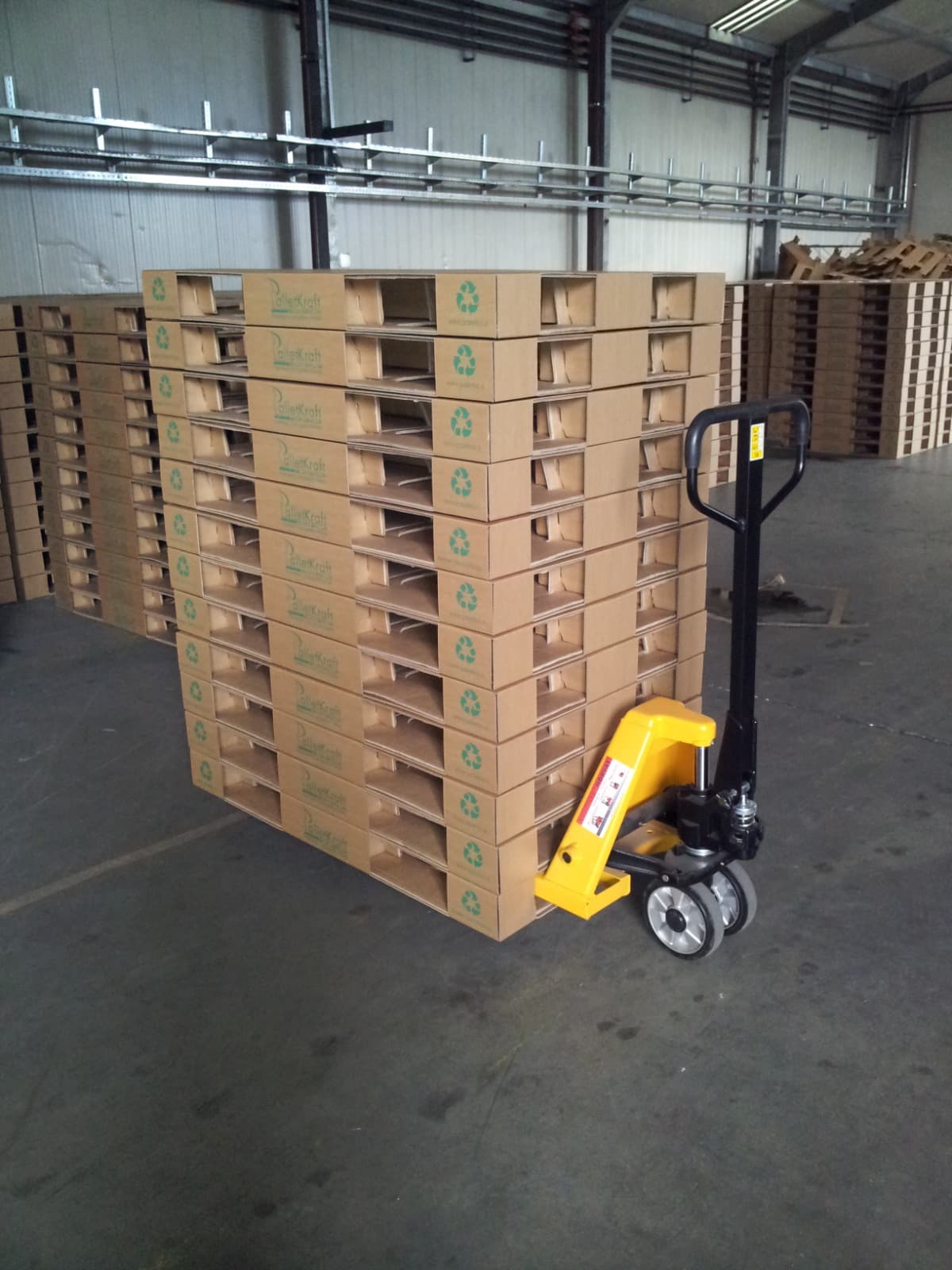
KraftPal has developed pallet technology based on high-performance corrugated materials engineered for industrial applications. Its history includes more than a decade of technology development, intellectual property creation, industrial experience, commercialisation and international market activity.
The commercial question is not whether fiber-based pallets sound more sustainable. The question is where their verified specifications create practical value. Depending on design, load, route and customer requirements, potential advantages may include lower unit weight, cleaner handling, reduced storage requirements before assembly and a fiber-based material route. Every claim must be assessed against the exact pallet specification and the customer's operating conditions.
Industrial Deployment Begins With Customer Demand
A large theoretical pallet market does not justify a factory. A credible production opportunity begins with addressable demand: customers, applications, required specifications, expected volumes and qualification procedures.
This is why customer-led development matters. Industrial users can help define the real product requirements before production capacity is committed. Their handling systems, load profiles, warehouse procedures, transport routes and compliance needs determine whether a particular pallet design is suitable.
Demand evidence also improves the investment case. Machinery, premises, staffing and working capital can be evaluated against a more realistic route to revenue. Capacity can be developed in phases. Technical qualification and customer onboarding can progress alongside production planning rather than after the factory has been built.
Local Production Can Bring Technology Closer to the Market
Pallets are physical products serving physical supply chains. Producing closer to meaningful regional demand can shorten the route between the factory and the customer, improve service responsiveness and align production with local operating requirements. The value of that proximity depends on volume, logistics, input availability and the production configuration, so each market requires its own business case.
The KraftPal licensing model gives qualified local partners a route to explore production using KraftPal technology. The local partner brings capital, facilities, management, people, customers and market execution. KraftPal remains the technology owner and licensing counterparty for any applicable license. ZeeQuest identifies and develops potential opportunities and facilitates business development.
That separation is commercially important. Technology ownership, licensing, opportunity origination and local operations are distinct responsibilities. Making them clear allows prospective partners to understand who provides the technology, who develops the opportunity and who will operate the business.
Industrial Technology Needs an Ecosystem Around It
Industrial projects rarely scale through a technology agreement alone. The project also needs machinery, quality control, facilities, trained operators, working capital, maintenance, input materials, customer qualification and dependable sales execution.
ZeeQuest Industrial focuses on bringing those components into one opportunity-development process. A prospective market is evaluated through customer access, industrial capability, capital, partner quality and production requirements. When the opportunity reaches the appropriate stage, KraftPal engages directly on technology and licensing.
This model reflects a wider ZeeQuest principle: innovation becomes commercially relevant when the surrounding capabilities are connected. The technology may already exist, but the next operating business still needs to be built market by market.
From Product Innovation to Regional Industry
The pallet is strategic because it appears at the base of so many supply chains. Improving it requires more than a new material. It requires evidence, engineering, customer fit and an operating model that can deliver consistently.
KraftPal provides the technology and licensing framework. ZeeQuest develops potential market opportunities around that technology. Qualified local partners can bring production capability and customer relationships. When those elements align, a familiar logistics component can become the basis of a new regional industrial business.