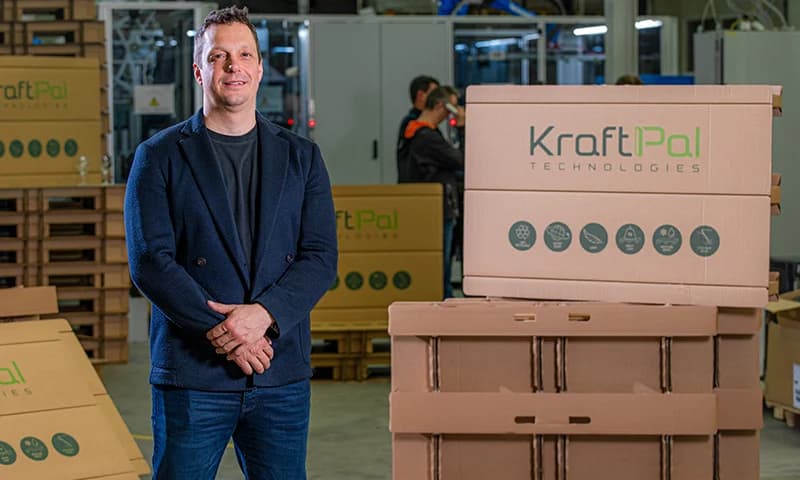
KraftPal Technology
From Structural Engineering to Industrial Production
KraftPal was developed as more than a new pallet design. It required an integrated technology platform connecting product architecture, fibre engineering, specialised machinery, automation, material flow, quality control, and the people responsible for turning an idea into repeatable industrial production.
Engineering the Production System
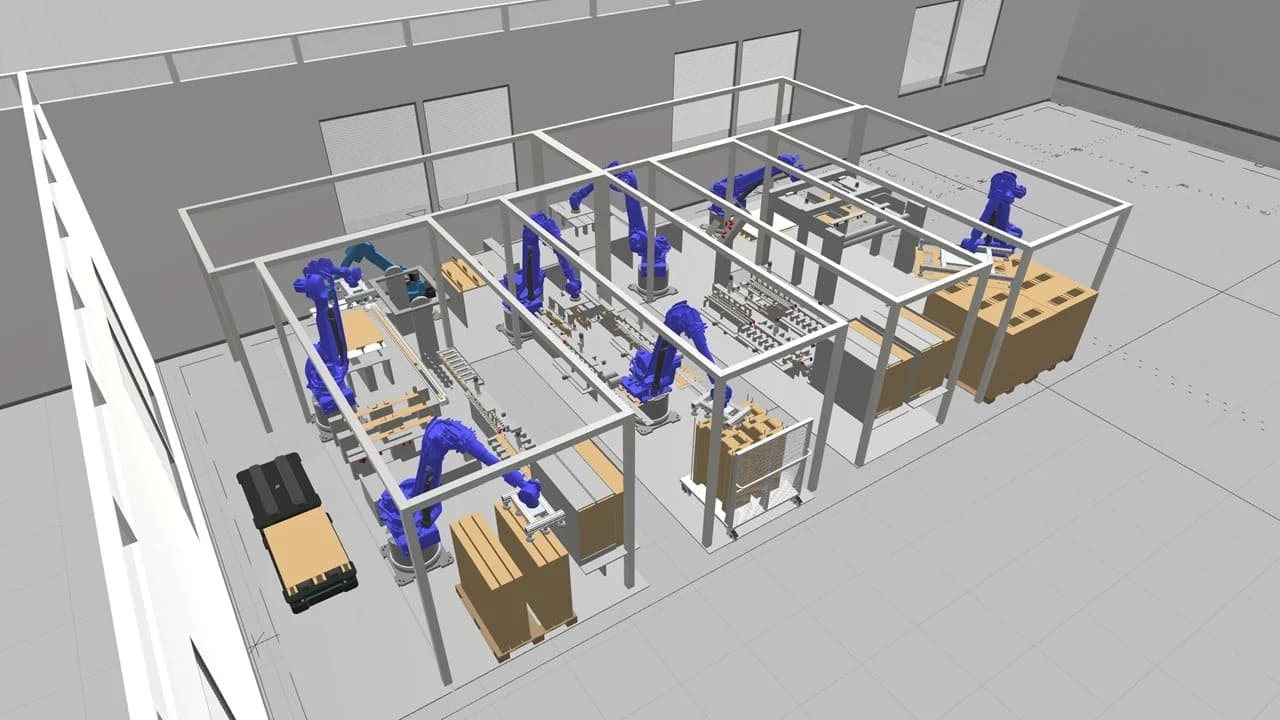
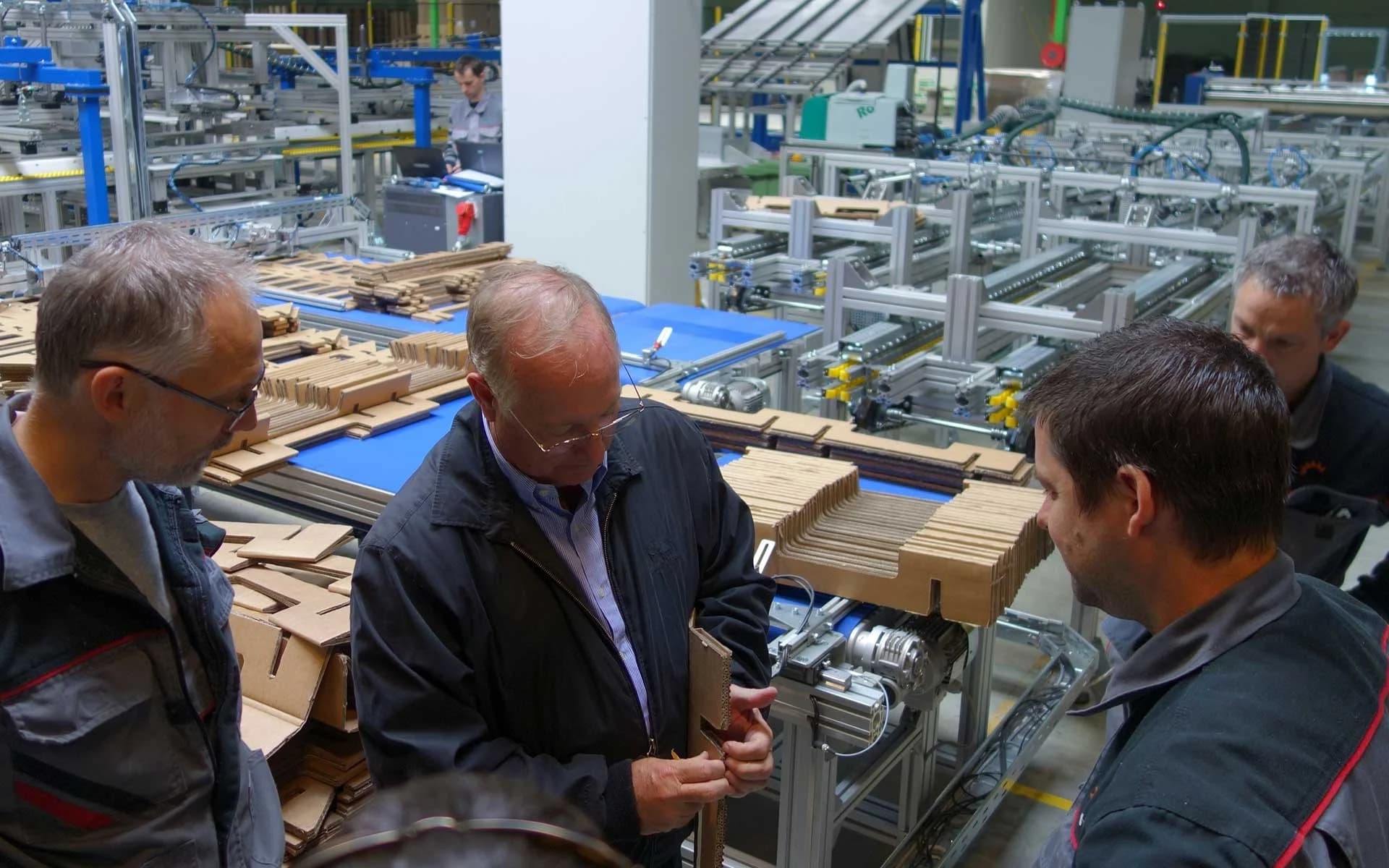
KraftPal technology extended beyond the pallet into the system required to manufacture it.
Industrial production begins with a complete understanding of material movement, machine sequence, quality control, and operator interaction.
Digital factory planning allowed the team to evaluate the production process as a connected system before equipment was installed and refined on the factory floor.
A scalable product requires a production architecture designed with the same discipline as the product itself.
Prototype Development and Validation
Every reliable industrial technology is built through repeated cycles of making, measuring, and improving.
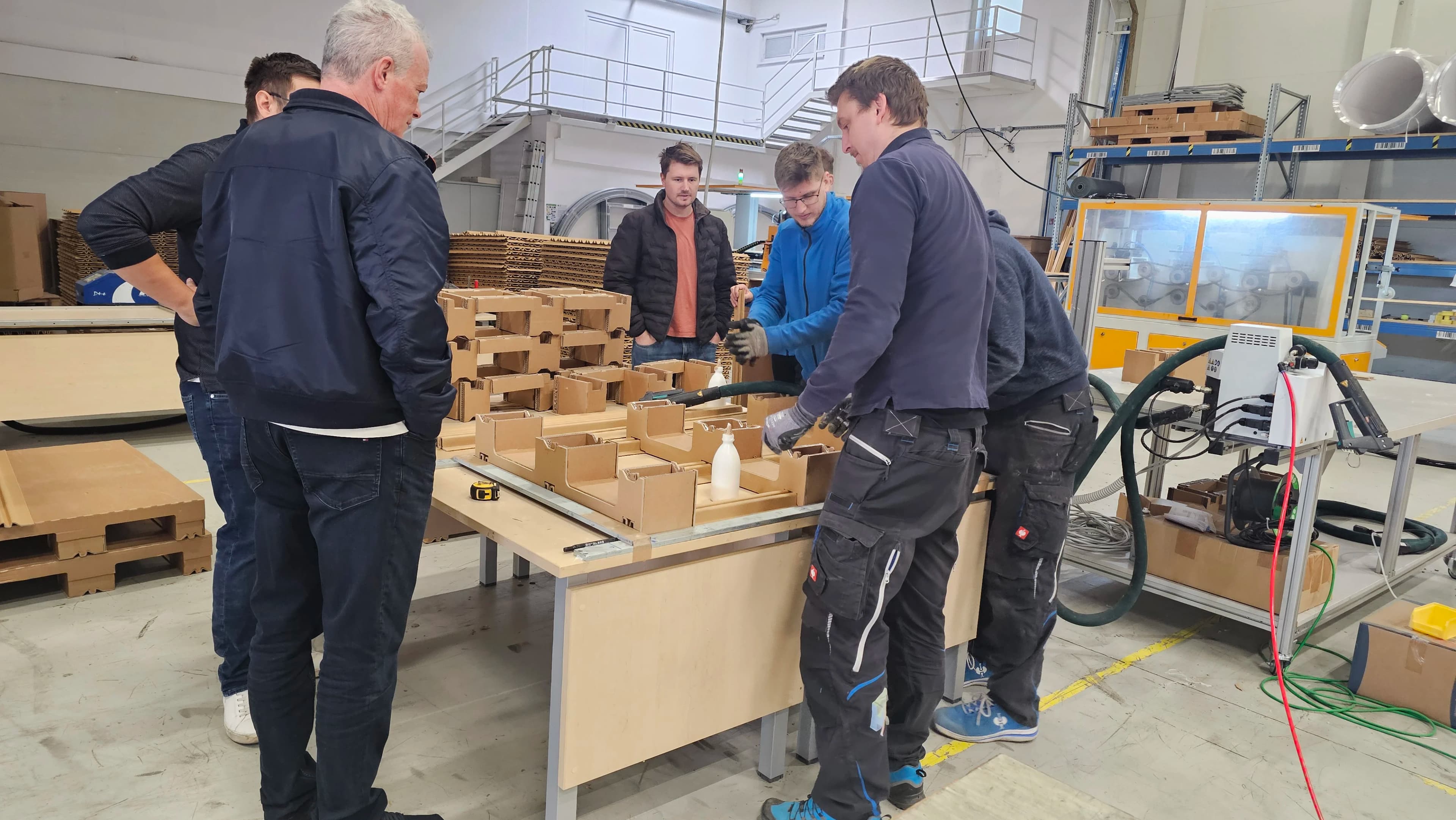
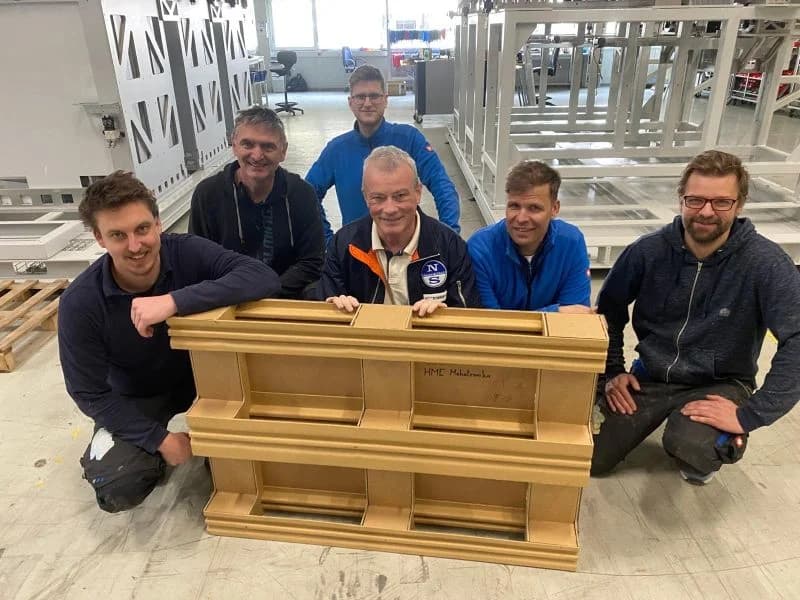
KraftPal prototypes allowed engineers to test structural concepts, assembly methods, tolerances, and handling behaviour under practical conditions.
Each iteration translated observations from the workshop into more precise designs and more repeatable manufacturing processes.
Prototyping turns assumptions into evidence and evidence into engineering progress.
Automation and Industrial Scale
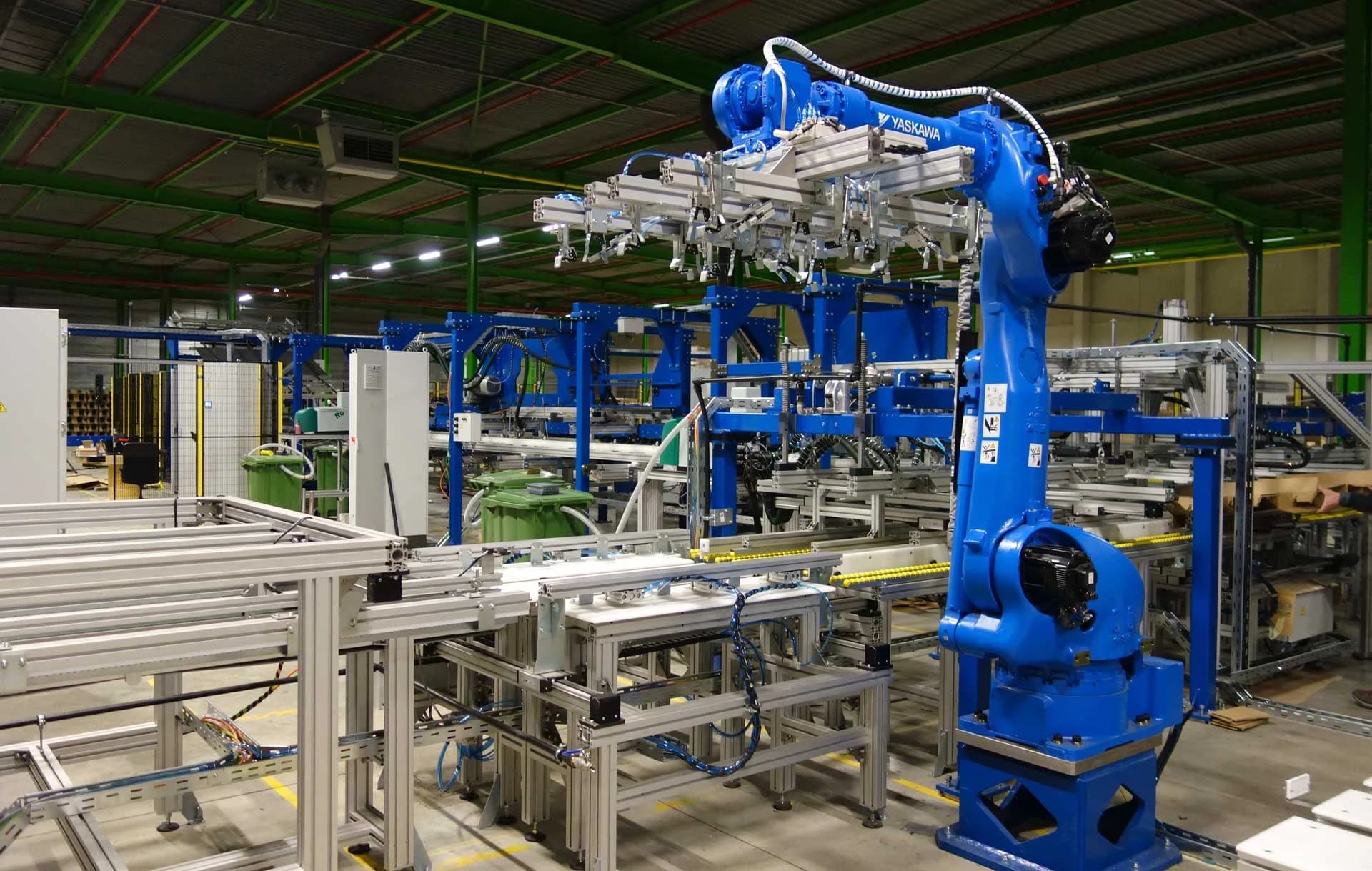
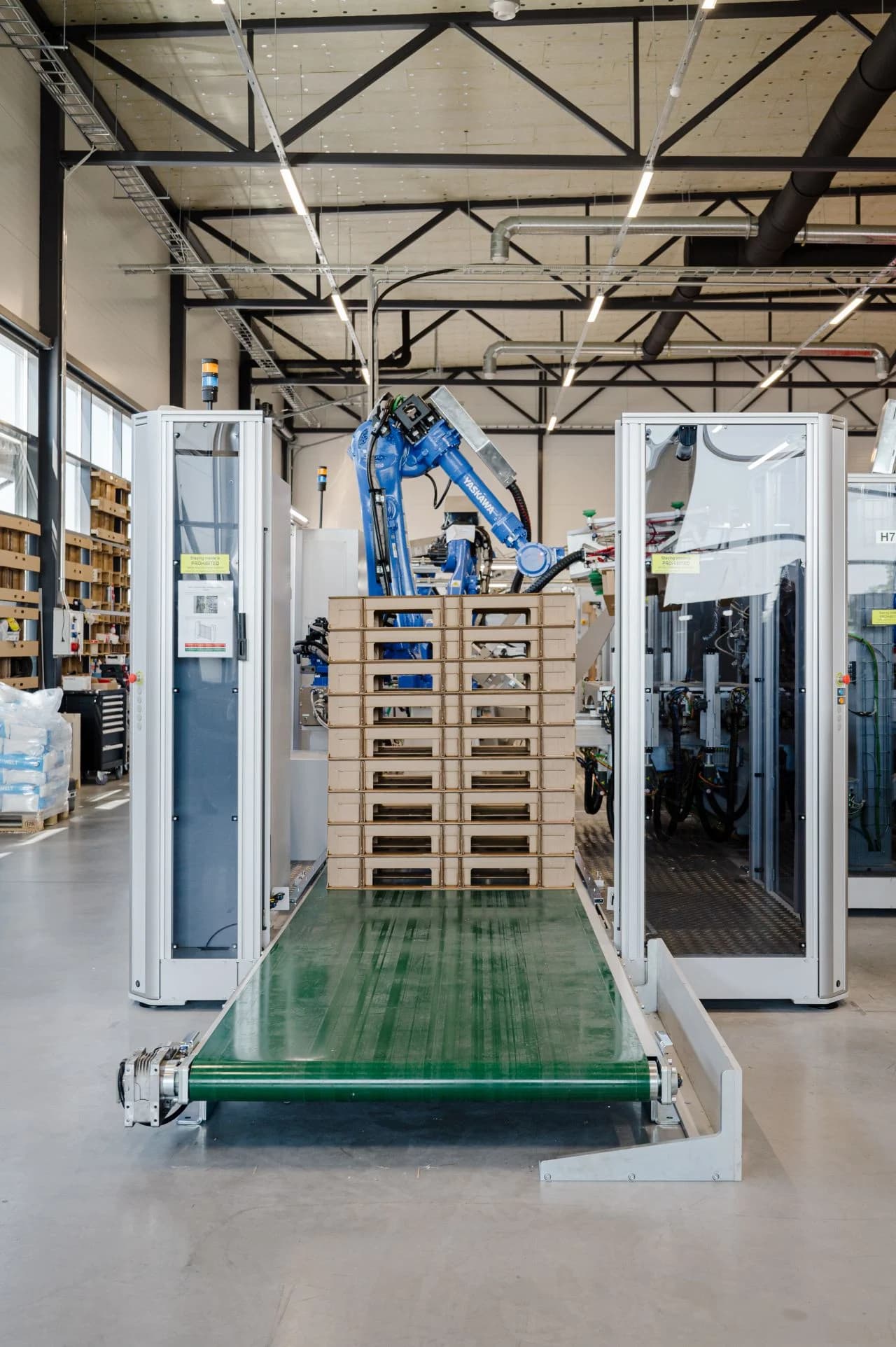
Consistent high-volume manufacturing depends on automation that is precise, adaptable, and maintainable.
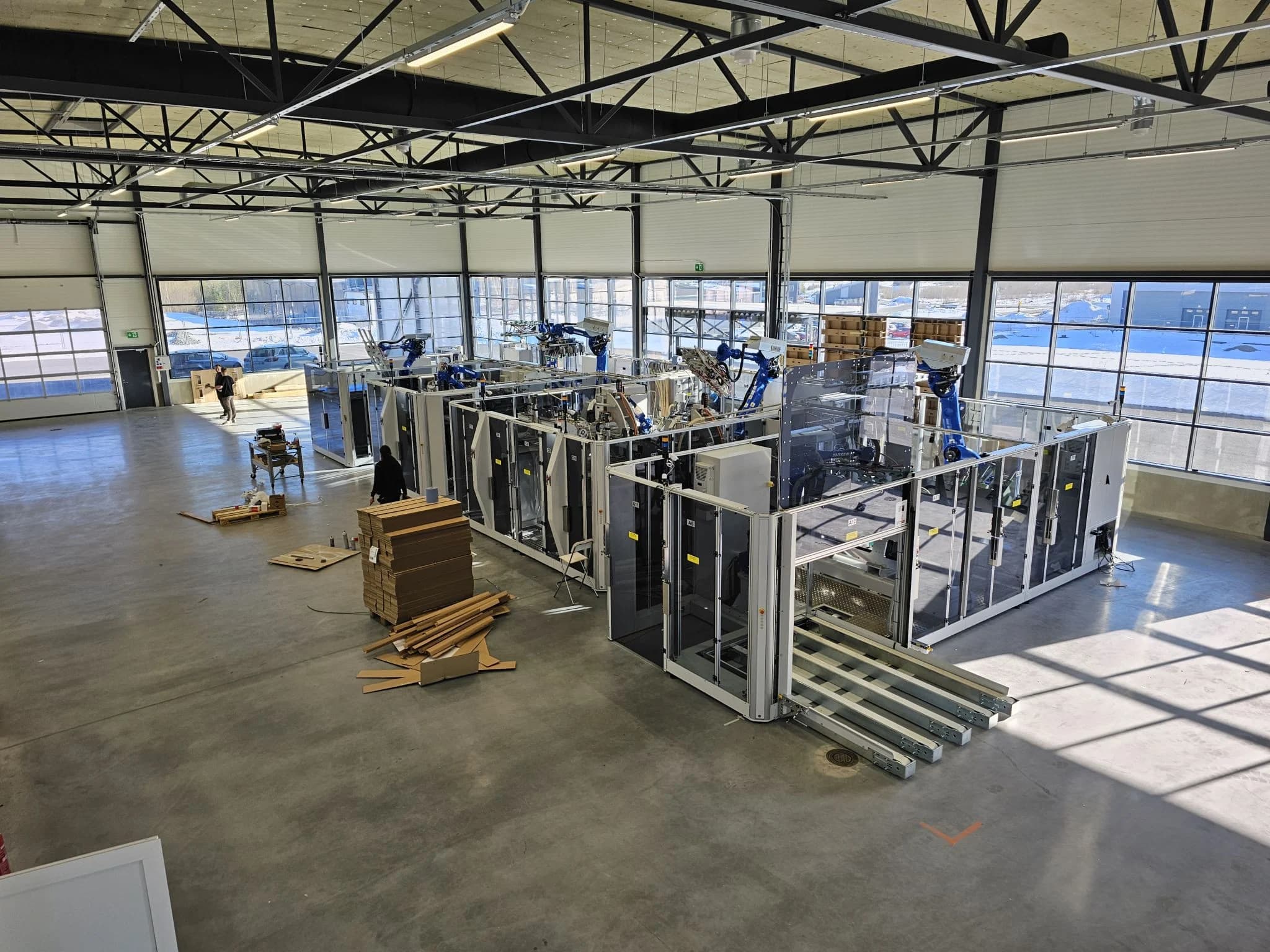
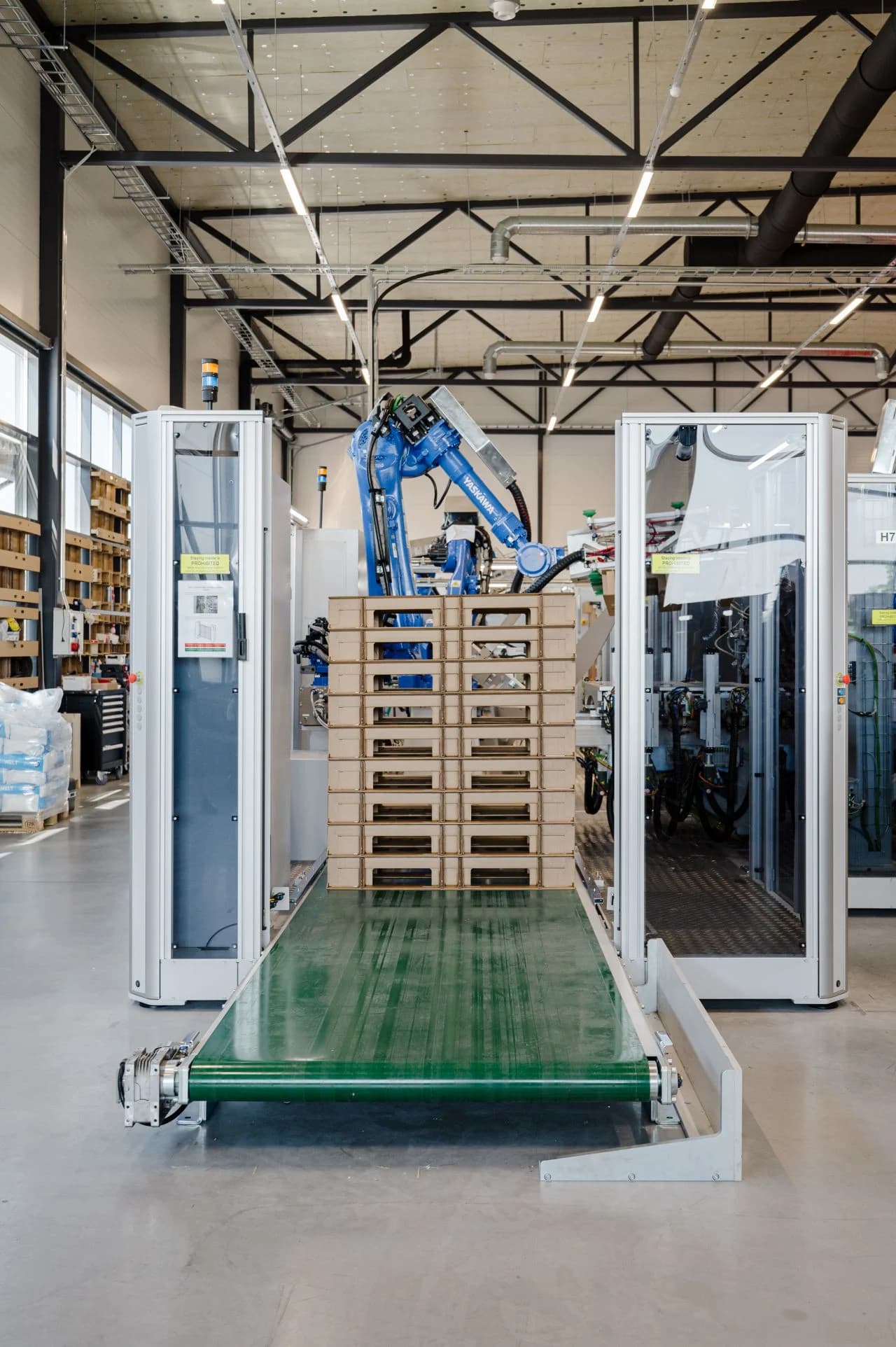
The KraftPal production environment integrated robotics, conveyors, forming equipment, and handling systems into a coordinated line.
Automation supported repeatable component placement and assembly while creating the foundation for reliable quality at industrial scale.
- Robotic material handling.
- Repeatable component positioning.
- Integrated production flow.
- Consistent manufacturing tolerances.
- Scalable output capacity.
Automation creates value when every machine contributes to one clear and measurable production objective.
Material Flow and Machine Integration
A production line performs only as well as the connections between its individual machines.
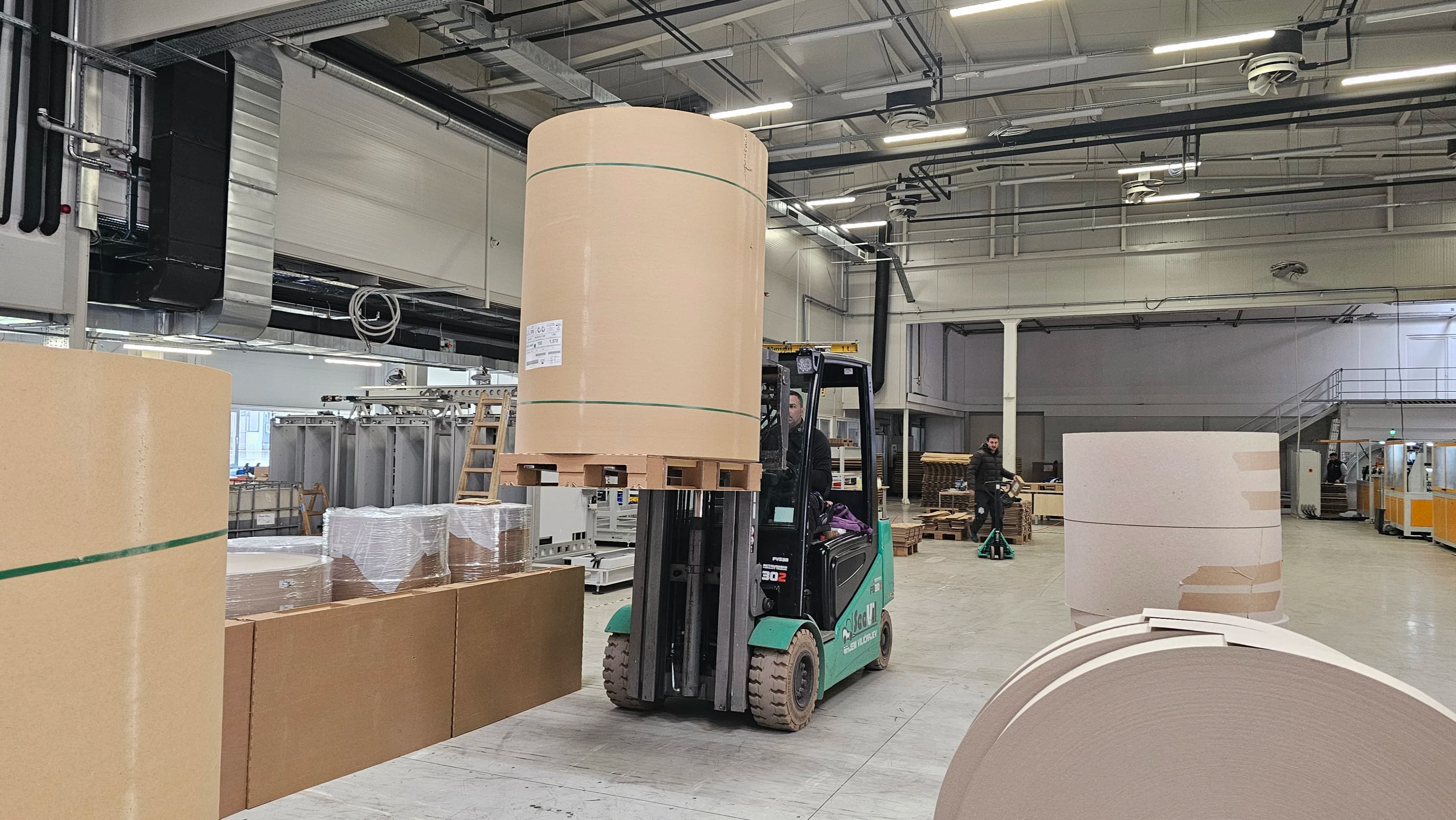
Raw fibre materials, formed components, and finished pallets must move through each operation without unnecessary handling or interruption.
KraftPal manufacturing development therefore considered equipment interfaces, material buffering, operator access, and downstream logistics as parts of one integrated process.
Industrial efficiency is created between machines as much as it is created inside them.
Product Architecture
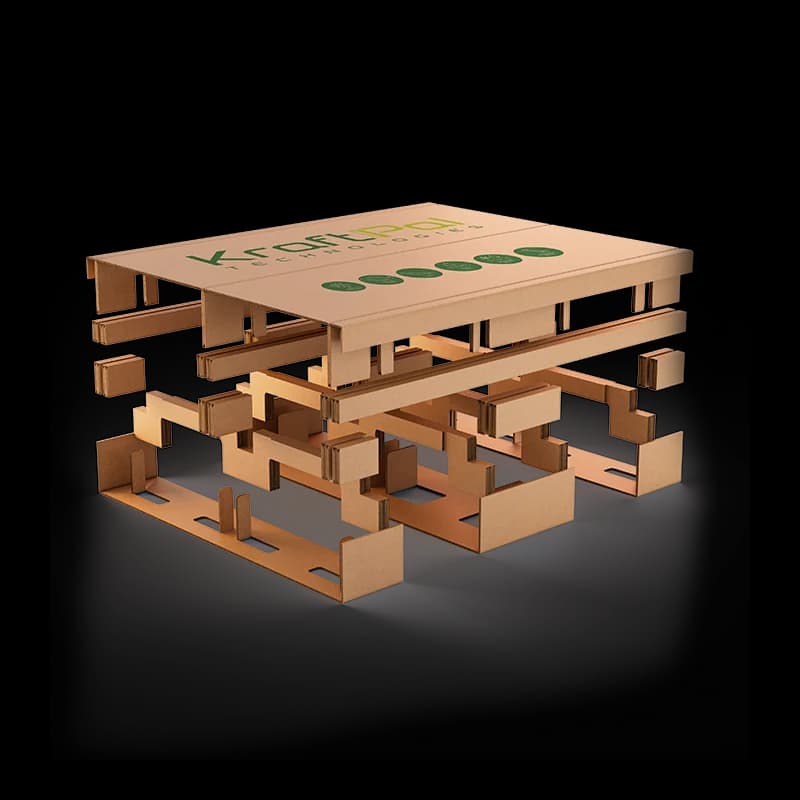
The final pallet is the visible result of many connected engineering decisions.
Structural geometry, fibre orientation, component design, assembly sequence, and manufacturing precision work together to control how loads travel through the pallet.
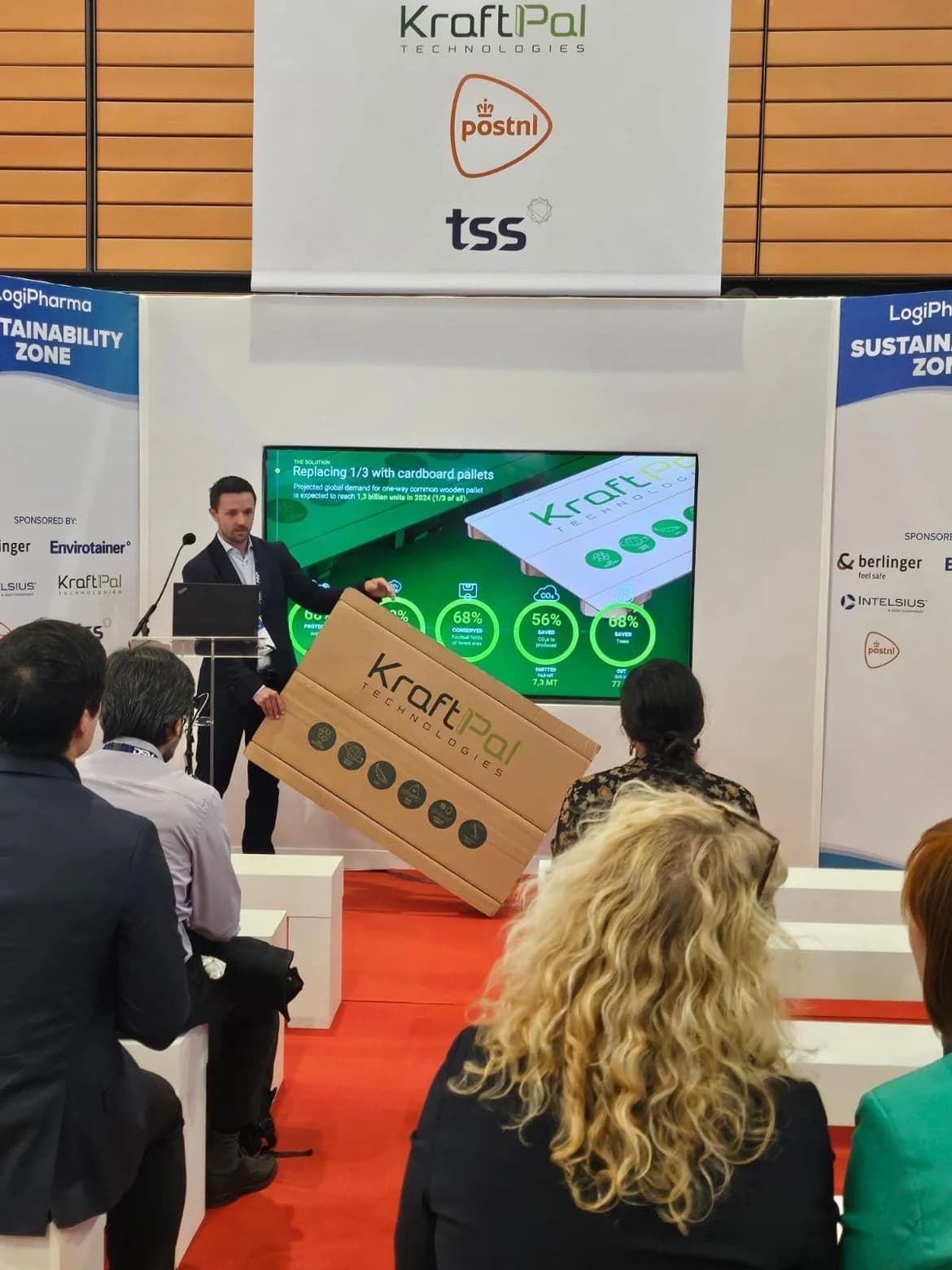
Explaining that architecture to technical audiences helped demonstrate why KraftPal was an engineered logistics platform rather than a simple material substitution.
Strong industrial design makes complex engineering understandable, repeatable, and useful.
Technology Built by People
Machines provide capability, but people create the knowledge that makes technology work.
KraftPal brought together product engineers, manufacturing specialists, operators, commercial teams, and external partners around a shared technical objective.
Their experience connected design intent with real factory conditions and kept the technology improving through every production cycle.
The most advanced production system still depends on human judgement, collaboration, and the discipline to keep learning.