Is the Global Pallet Industry Ready for Its Biggest Transformation in 100 Years?
For more than a century, corrugated cardboard has transformed global packaging. It replaced wooden crates, enabled mass production of shipping cartons and became one of the world's most widely recycled industrial materials.
Yet one critical element of the supply chain has remained largely unchanged: the wooden pallet.
While packaging has continuously evolved toward lighter, more sustainable materials, billions of wooden pallets continue to move goods through global supply chains every year. As industries accelerate their transition toward net-zero operations and circular economy principles, transport packaging is increasingly becoming part of that conversation.
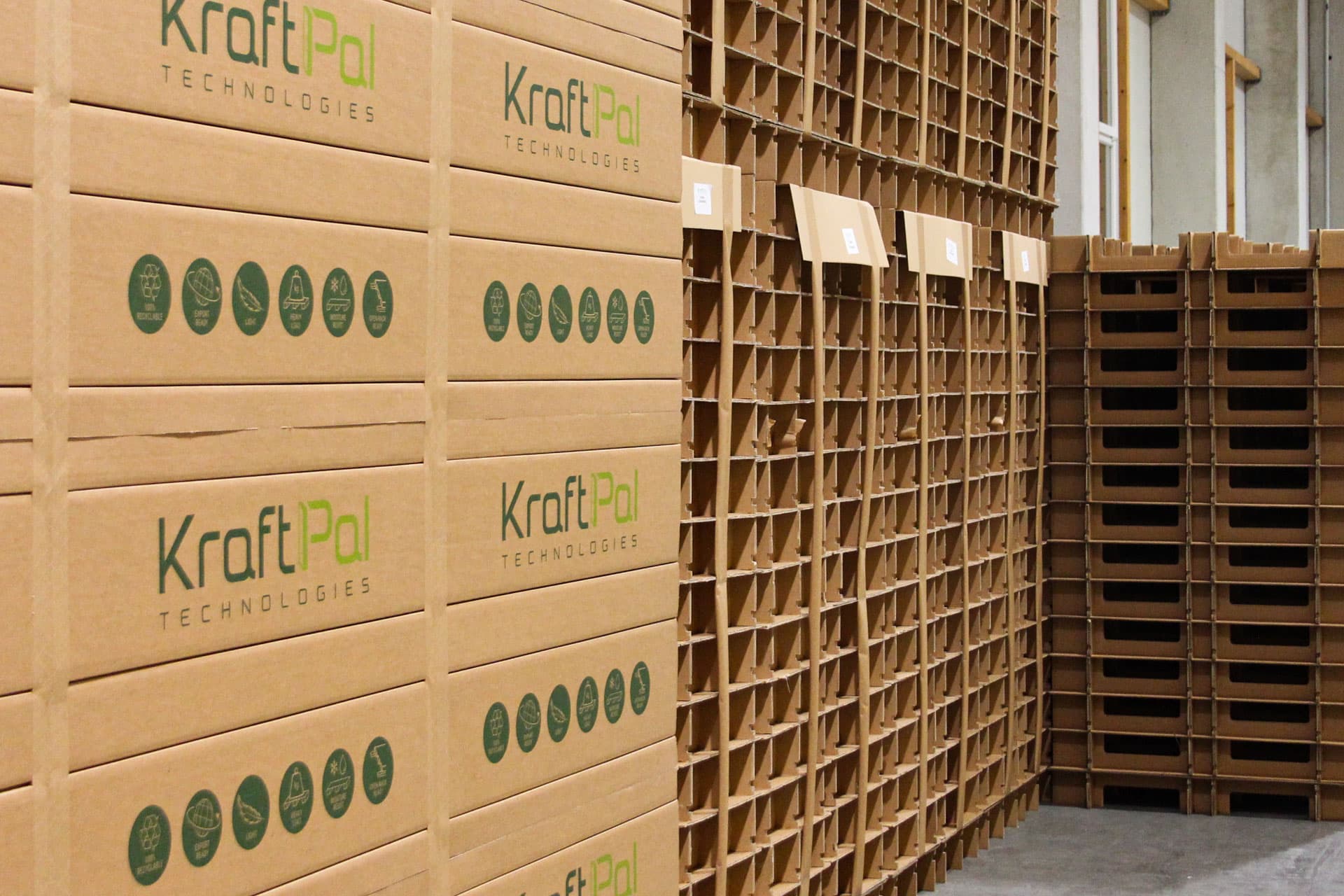
KraftPal believes the next major transformation in logistics will focus on replacing traditional one-way wooden pallets with lightweight, recyclable alternatives capable of delivering comparable industrial performance while significantly reducing environmental impact.
After more than fifteen years of research and development, the company has developed an integrated technology platform combining its patented X-Pallet™ structural system with the Palletonator™ automated manufacturing platform. Together, these technologies enable industrial-scale production of corrugated pallets designed for modern logistics operations.
Independent lifecycle assessments have demonstrated significant environmental benefits compared with conventional wooden pallets, including:
82% less raw material required during manufacturing.
52% lower manufacturing-stage CO₂e emissions.
More than 80% lower transport weight, reducing fuel consumption.
100% recyclability through existing paper recycling infrastructure.
Approximately 52% lower lifecycle CO₂e emissions compared with a standard EUR1 wooden pallet.
Equally important, KraftPal's technology has been designed to integrate into existing logistics operations without requiring modifications to warehouses, forklifts, conveyor systems or supply chain processes.
As governments, manufacturers and retailers continue investing in sustainable logistics, lightweight transport packaging is expected to become an increasingly important contributor to reducing carbon emissions across global supply chains.
More than 120 years after corrugated cardboard replaced wooden shipping crates, the logistics industry may once again be approaching a defining technological transition, this time at pallet level.
For KraftPal, the objective remains clear: to develop technologies that enable businesses to improve operational efficiency while supporting a more sustainable future for global logistics.