Save Your Future: How to Reduce Pallet Costs Without Compromising Quality or Sustainability
Reducing operational costs has become one of the highest priorities for manufacturers, logistics providers and distributors worldwide. At the same time, businesses face growing pressure to reduce carbon emissions, improve ESG performance and build more resilient supply chains.
For procurement teams, these objectives often appear to conflict.
How can a company lower costs while simultaneously becoming more sustainable?
One answer may be found in one of the most overlooked components of the supply chain—the pallet.
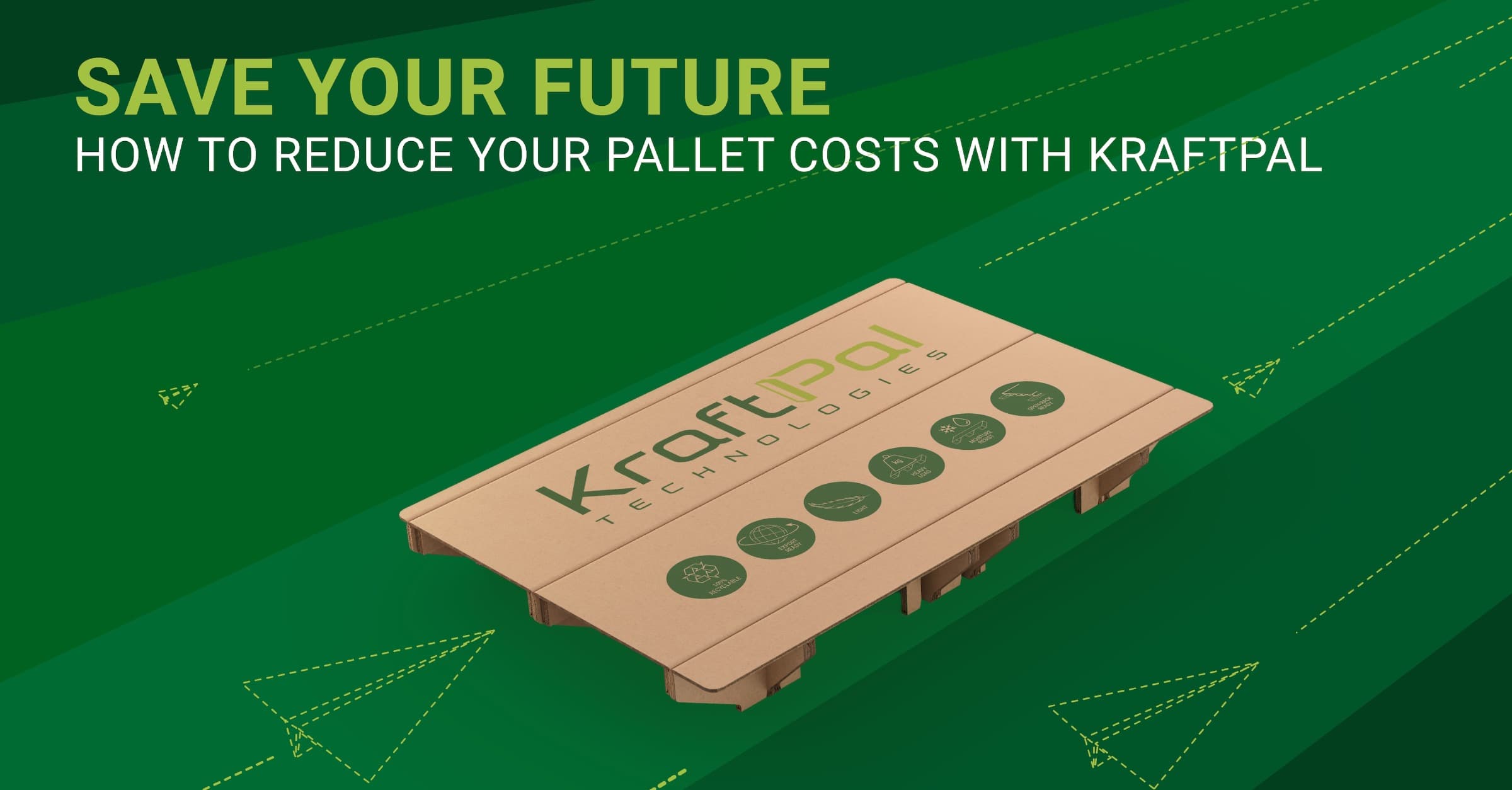
KraftPal Technologies has developed a new generation of corrugated pallet solutions that help businesses reduce pallet costs, lower transportation expenses and decrease carbon emissions without requiring major operational changes.
Why Pallet Costs Matter More Than Ever
Pallets are purchased in enormous quantities.
For companies shipping thousands—or even millions—of products each year, even small reductions in pallet costs can generate substantial annual savings.
However, the purchase price represents only part of the total cost.
The true cost of a pallet also includes:
Transportation.
Storage.
Handling.
Export compliance.
Waste management.
Workplace safety.
Product contamination risks.
Sustainability reporting.
Optimizing pallet selection therefore has a direct impact on total supply chain performance.
Lower Material Usage Creates Lower Costs
Unlike traditional wooden pallets that require significant quantities of timber regardless of the load being transported, KraftPal corrugated pallets are engineered according to application requirements.
This intelligent design philosophy enables:
Reduced raw material consumption.
Lower production costs.
Optimized structural performance.
Lower transportation weight.
Improved sustainability.
Instead of paying for unnecessary material, companies receive pallets engineered specifically for the intended logistics application.
Lower Weight Means Lower Logistics Costs
Weight influences every stage of transportation.
Every kilogram carried through warehouses, trucks, containers and aircraft increases operating costs.
KraftPal corrugated pallets are up to 80% lighter than conventional wooden pallets.
This creates measurable advantages including:
Lower freight costs.
Reduced fuel consumption.
Easier manual handling.
Faster warehouse operations.
Improved workplace ergonomics.
Lower transport-related CO₂ emissions.
For organizations operating high-volume distribution networks, these efficiencies quickly accumulate across thousands of shipments.
Export Ready Without Additional Treatment
International shipping requires compliance with ISPM 15 regulations designed to prevent the spread of pests through wooden packaging materials.
Traditional wooden pallets often require:
Heat treatment.
Fumigation.
Documentation.
Ongoing compliance procedures.
KraftPal corrugated pallets are naturally ISPM 15 exempt, eliminating these additional processes for many export applications.
This simplifies international logistics while reducing compliance costs and administrative workload.
Cleaner Logistics Operations
Clean supply chains are becoming increasingly important, particularly in industries such as:
Pharmaceuticals.
Food and beverage.
Consumer products.
Electronics.
Medical devices.
Unlike traditional wooden pallets, KraftPal corrugated pallets are:
Hygienic.
Dust-free.
Residue-free.
Splinter-free.
Moisture resistant under controlled conditions.
Cleaner pallets contribute to cleaner warehouses, lower maintenance requirements and safer working environments.
Custom Engineering for Every Supply Chain
Every logistics operation is different.
Rather than forcing customers to adapt to standard pallet designs, KraftPal's manufacturing platform allows products to be optimized for specific applications.
Solutions can be engineered according to:
Load capacity.
Product dimensions.
Industry standards.
Transportation mode.
Customer-specific requirements.
This flexibility enables companies to optimize material usage while maintaining operational performance.
Powered by Palletonator™
Behind every KraftPal pallet is the company's proprietary Palletonator™ manufacturing system.
The Industry 4.0 production platform combines:
Robotics.
Automated quality control.
Intelligent monitoring.
High-speed production.
Modular manufacturing.
Precision engineering.
With more than 15,000 engineered components, the Palletonator™ produces globally standardized pallets with exceptional consistency while supporting localized manufacturing close to customers.
Consistent Quality Around the World
One of KraftPal's strategic advantages is its global manufacturing philosophy.
Regional Local Production Units (LPUs) manufacture pallets close to customers while maintaining identical engineering and quality standards.
This enables multinational organizations to source consistent products regardless of geography while reducing transport distances and strengthening supply chain resilience.
Founder Perspective
Gregor Brajović, Founder and CEO of KraftPal Technologies, explains:
"Procurement should no longer be measured by purchase price alone. Companies need to evaluate the total cost of ownership across the entire supply chain."
"Our objective has always been to engineer pallets that reduce operating costs while simultaneously improving sustainability. When businesses no longer have to choose between profitability and environmental responsibility, everyone benefits."
Looking Beyond the Purchase Price
Many organizations compare pallets based only on the invoice price.
The better question is:
What does the pallet cost throughout its entire lifecycle?
When transportation, handling, export compliance, warehouse efficiency, recycling and sustainability objectives are considered together, the economics become significantly more compelling.
The most affordable pallet is not necessarily the cheapest to buy.
It is the pallet that creates the greatest value across the entire supply chain.
The Future of Procurement
Modern procurement is evolving.
Today's purchasing decisions increasingly consider:
Total cost of ownership.
Carbon footprint.
ESG objectives.
Circular economy compatibility.
Supply chain resilience.
Operational efficiency.
Long-term business value.
KraftPal's corrugated pallet technology was developed specifically to address all of these priorities simultaneously.
Reducing pallet costs should never require compromising quality.
With intelligent engineering, businesses can improve both.
Frequently Asked Questions
Are corrugated pallets cheaper than wooden pallets?
Pricing depends on pallet dimensions, load capacity, order volume and region. However, many organizations achieve additional savings through lower transport costs, simplified export compliance and reduced handling expenses.
What industries benefit from lower pallet costs?
Manufacturing, pharmaceuticals, food and beverage, retail, automotive, e-commerce and export logistics all benefit from lighter, recyclable transport platforms.
Are KraftPal pallets export compliant?
Yes. Corrugated pallets are naturally ISPM 15 exempt, making them well suited for international one-way shipments.
Can companies reduce both pallet costs and carbon emissions?
Yes. Lower pallet weight reduces transportation costs while simultaneously lowering transport-related CO₂ emissions throughout the supply chain.
Why should procurement teams evaluate total cost instead of purchase price?
Transportation, handling, disposal, compliance, maintenance and sustainability all contribute to the overall cost of using a pallet. Considering these factors provides a more accurate picture of long-term value.