Sustainable Pallet Solutions That Reduce Both Logistics Costs and Carbon Emissions
For more than one hundred years, the wooden pallet has remained one of the few logistics components that has changed very little. While warehouses have become automated, supply chains have become digital, and artificial intelligence is transforming logistics planning, billions of shipments every year still rely on technology introduced during the early twentieth century.
Today, however, logistics is entering a new era.
Companies are expected to reduce emissions, improve efficiency, strengthen supply chain resilience and support circular economy initiatives—all while controlling costs.
These new challenges require new solutions.
KraftPal Technologies believes the future of one-way logistics begins with rethinking the pallet itself.
The Hidden Environmental Cost of Traditional Wooden Pallets
Every year, an estimated 5.8 billion wooden pallets are manufactured worldwide.
A substantial proportion of these pallets are used only once before being discarded.
Although wooden pallets remain an excellent solution for many closed-loop logistics systems, disposable one-way pallets create several long-term challenges:
Large-scale timber consumption.
Higher transport weight.
Increased fuel usage.
Greater carbon emissions.
Difficult recycling processes.
Higher disposal costs.
Hygiene concerns in sensitive industries.
Workplace handling risks.
As governments introduce stricter environmental regulations and businesses commit to Net Zero strategies, transport packaging has become an increasingly important contributor to overall supply chain sustainability.
A New Generation of Sustainable Pallets
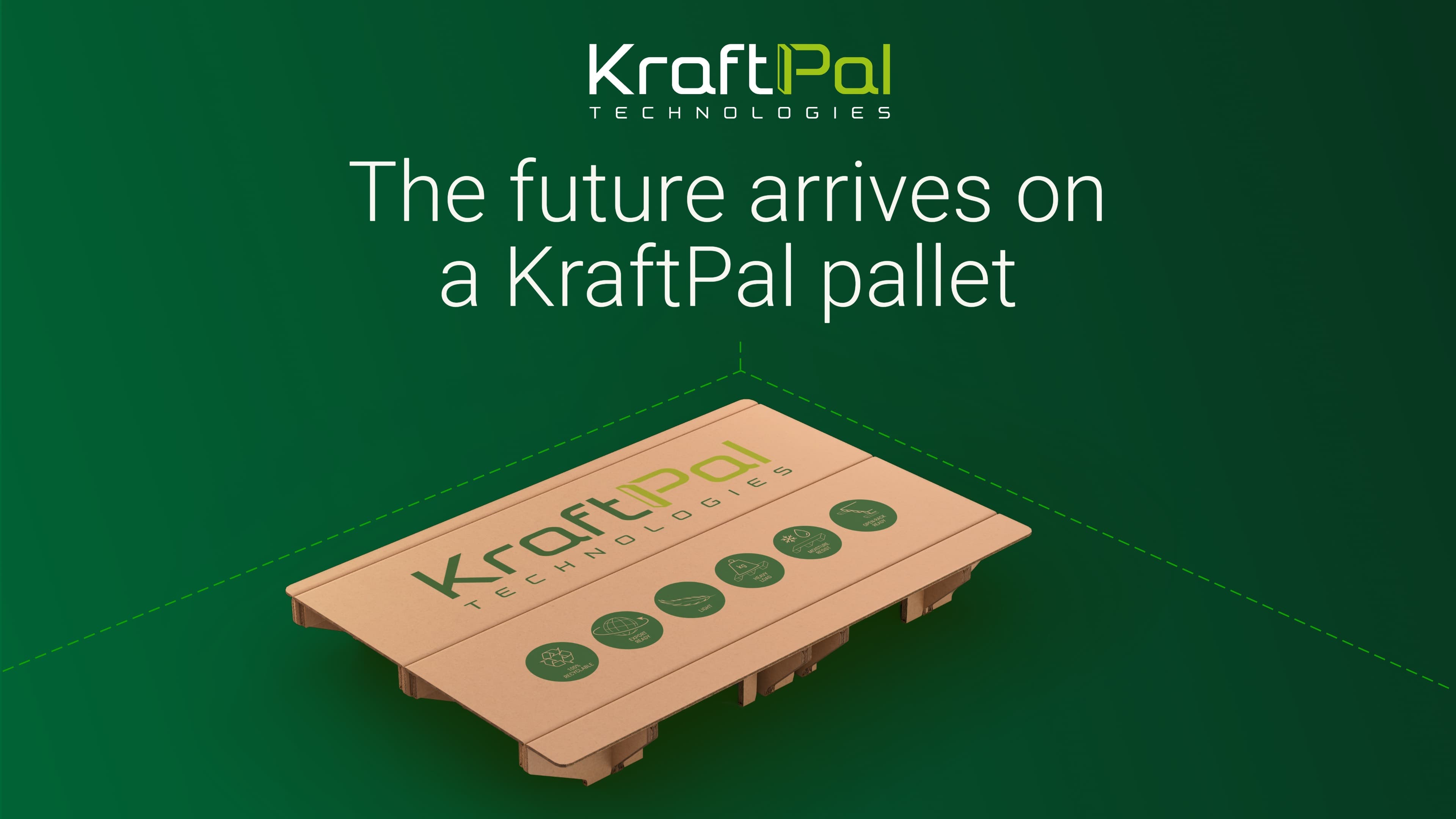
KraftPal developed its corrugated pallet technology specifically for modern one-way logistics.
Instead of treating sustainability as an additional feature, it became the engineering foundation of the product itself.
Compared with conventional disposable wooden pallets, KraftPal solutions deliver:
Up to 80% lower transport weight.
Up to 80% lower transport-related carbon emissions.
100% recyclable fibre-based construction.
Hygienic and residue-free surfaces.
Lower pallet handling costs.
Simplified disposal through existing paper recycling systems.
Compatibility with existing logistics infrastructure.
The result is a transport platform designed for both economic and environmental performance.
Why Weight Matters in Logistics
Every kilogram transported affects fuel consumption, handling efficiency and operating costs.
Reducing pallet weight creates benefits throughout the entire supply chain.
Lighter pallets contribute to:
Lower transportation costs.
Reduced fuel consumption.
Lower greenhouse gas emissions.
Easier warehouse handling.
Improved workplace safety.
Greater transport efficiency across road, sea and air freight.
These cumulative savings become increasingly significant for companies managing thousands or millions of shipments each year.
Engineered for Industrial Performance
Lightweight does not mean lightweight performance.
KraftPal's proprietary X-Pallet™ engineering provides exceptional structural strength while minimizing material usage.
Selected pallet models can support:
Static loads up to 4,500 kg (9,920 lbs).
Dynamic transport loads up to 1,500 kg (3,300 lbs).
This combination of strength and low weight enables corrugated pallets to perform reliably across a wide range of industrial applications.
Built for Circular Economy Supply Chains
Circular economy principles encourage products that remain valuable throughout their lifecycle while minimizing waste.
KraftPal pallets naturally support these objectives because they are manufactured from corrugated fibre materials that integrate directly into existing recycling systems.
Instead of becoming waste after delivery, the material can be recovered and reused, reducing demand for virgin resources and supporting corporate sustainability strategies.
For organizations pursuing ESG reporting, Scope 3 emission reductions and circular economy initiatives, transport packaging is becoming an increasingly important opportunity for measurable improvement.
Intelligent Manufacturing Through Palletonator™
Behind every KraftPal pallet is the company's proprietary Palletonator™ manufacturing platform.
Developed over many years of engineering and industrial research, the fully automated production system integrates:
Industry 4.0 technologies.
Robotics.
Intelligent quality control.
Modular manufacturing.
High-speed production.
Global manufacturing standardization.
This enables KraftPal to produce consistent, high-quality pallets at industrial scale while supporting regional manufacturing closer to customers.
A Global Manufacturing Network
KraftPal's strategy extends beyond product innovation.
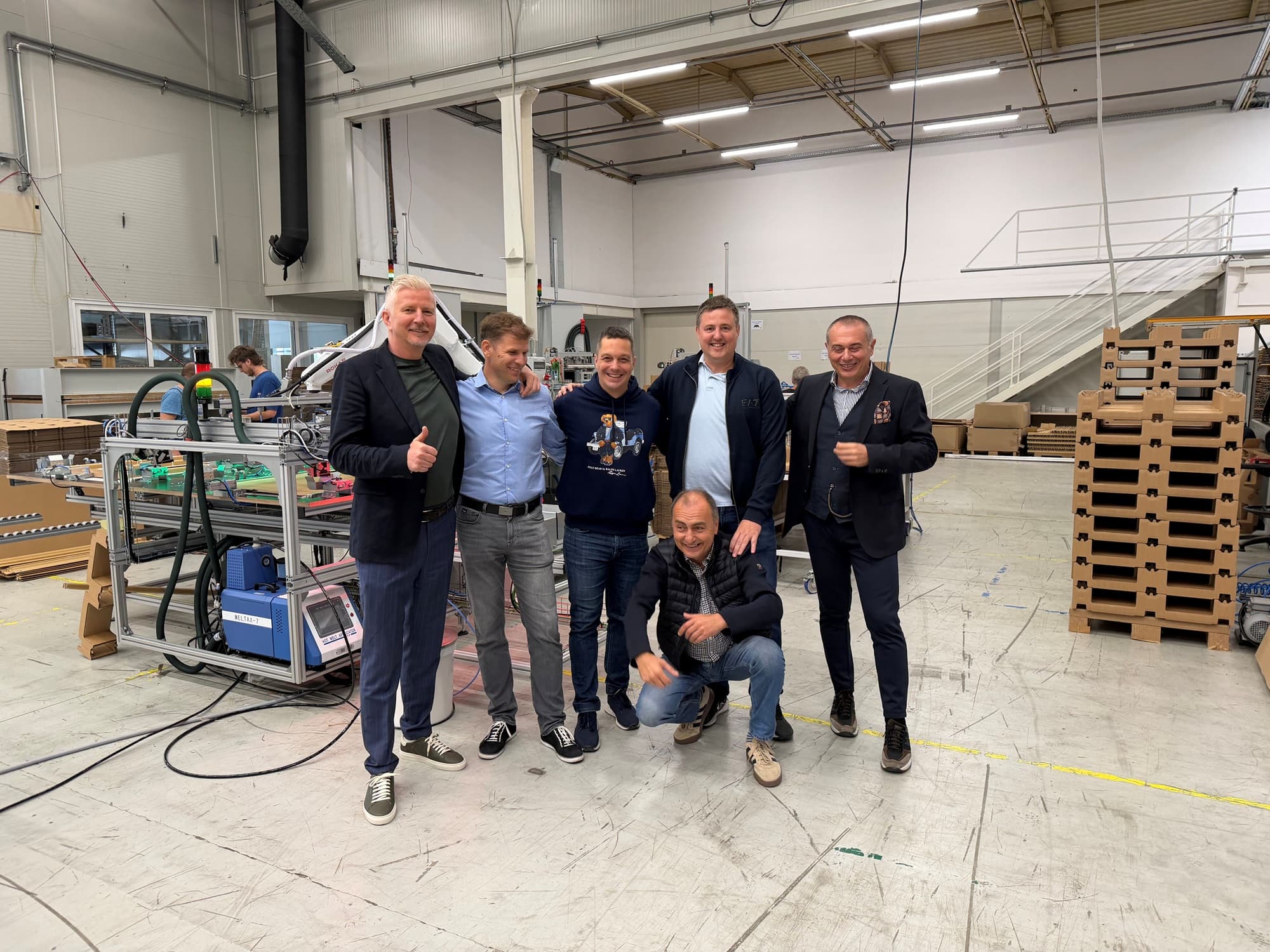
The company is building a decentralized network of Local Production Units (LPUs) that manufacture pallets close to regional markets.
Manufacturing facilities already operate or have been established across:
Austria.
Finland.
Saudi Arabia.
Additional expansion continues in North America through the development of KraftPal USA.
Regional manufacturing shortens transport distances, strengthens supply chain resilience and further reduces environmental impact.
Founder Perspective
Gregor Brajović, Founder and CEO of KraftPal Technologies, commented:
"The future of logistics depends on solving two challenges simultaneously: reducing environmental impact while improving economic performance. Businesses should never have to choose between sustainability and efficiency."
"Our engineering philosophy has always been simple—develop solutions that fit into today's logistics systems while preparing companies for tomorrow's sustainability requirements. That is exactly what KraftPal was created to achieve."
The Future of One-Way Logistics
The logistics industry is undergoing one of its largest transformations since the introduction of standardized pallets nearly a century ago.
Organizations increasingly recognize that sustainability is no longer a compliance exercise—it has become a competitive advantage.
Modern transport platforms must deliver:
Lower emissions.
Lower operating costs.
Higher efficiency.
Better recyclability.
Greater supply chain resilience.
Consistent industrial performance.
KraftPal's corrugated pallet technology was developed to meet precisely these expectations.
As manufacturers, retailers and logistics providers continue modernizing global supply chains, sustainable transport packaging will play an increasingly important role in shaping the future of international trade.
The future of logistics is lighter, smarter and more sustainable.
Increasingly, it begins with the pallet.