Why Corrugated Pallets Could Become the Next Major Evolution in Global Logistics
For more than a century, corrugated cardboard has transformed the way goods are packaged and transported. It replaced wooden crates, revolutionised retail packaging and became one of the world's most recyclable industrial materials.
Yet one essential component of the supply chain has remained largely unchanged: the wooden pallet.
Today, billions of wooden pallets continue to move products across global supply chains despite growing pressure to reduce carbon emissions, improve resource efficiency and support circular economy principles.
From Wooden Crates to Corrugated Boxes
The evolution of transport packaging demonstrates that industries continually adopt materials that deliver better performance, lower costs and improved sustainability.
Corrugated cardboard has been used commercially since the nineteenth century and gradually replaced heavy wooden shipping crates because it offered significant advantages:
Lower material consumption.
Reduced transport weight.
Lower manufacturing costs.
Easier recycling.
Greater design flexibility.
This transition permanently changed global packaging.
Why Have Wooden Pallets Remained?
Unlike boxes, pallets perform a structural function.
They must withstand:
Heavy static and dynamic loads.
Forklift handling.
Conveyor systems.
Warehouse racking.
International logistics standards.
For decades, these technical requirements prevented corrugated pallets from becoming a mainstream alternative.
The Engineering Challenge
Developing a viable corrugated pallet requires solving several engineering problems simultaneously:
Structural rigidity.
Load capacity.
Moisture resistance.
Automated manufacturing.
Cost competitiveness.
Compatibility with existing logistics infrastructure.
While many companies attempted to develop corrugated pallets, widespread adoption remained limited because products typically failed to satisfy industrial performance requirements or could not be manufactured economically at scale.
KraftPal's Engineering Approach
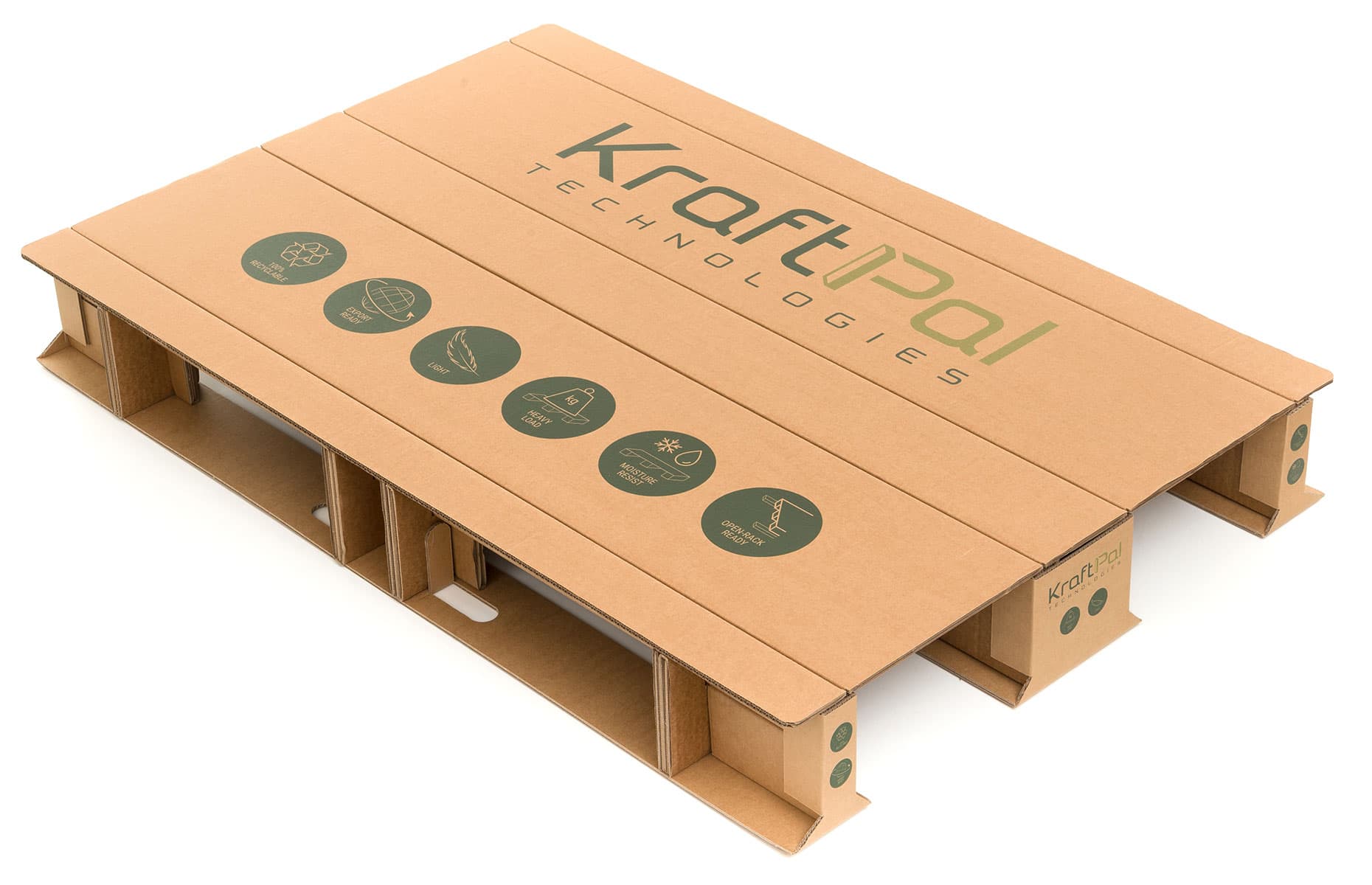
Over more than fifteen years of research and development, KraftPal focused on solving these challenges through an integrated technology platform rather than simply designing a new pallet.
The company's innovation combines:
X-Pallet™ structural technology.
Palletonator™ automated manufacturing.
Proprietary interlocking engineering.
High-speed robotic production.
Industry 4.0 manufacturing principles.
Global licensing and regional production.
Together, these technologies enable industrial-scale production of lightweight corrugated pallets designed for modern logistics operations.
Sustainability Beyond Consumer Packaging
Most sustainability discussions focus on consumer-facing packaging.
However, transport packaging moves every product multiple times before reaching consumers.
Reducing the environmental footprint of transport packaging therefore has significant implications across entire supply chains.
Independent lifecycle assessments indicate that KraftPal's corrugated pallet technology offers measurable environmental advantages compared with conventional EUR1 wooden pallets, including:
82% less raw material consumption during manufacturing.
52% lower manufacturing-stage CO₂e emissions.
More than 80% lower transport weight, reducing fuel consumption.
100% recyclability through existing paper recycling systems.
Approximately 52% lower lifecycle CO₂e emissions across the complete product lifecycle.
Compatibility Matters
Perhaps the most important factor influencing adoption is compatibility.
KraftPal pallets were developed to integrate into existing logistics infrastructure without requiring customers to modify warehouses, forklifts, conveyor systems or operational procedures.
This allows organisations to improve sustainability while maintaining operational continuity.
The Next Evolution of Transport Packaging
Throughout history, logistics has continuously evolved through innovations that reduce cost, improve efficiency and minimise environmental impact.
Just as corrugated boxes replaced wooden crates more than a century ago, advances in engineering and manufacturing are creating new opportunities for transport packaging.
Whether corrugated pallets become a mainstream alternative will ultimately depend on performance, economics and customer adoption.
What is becoming increasingly clear, however, is that sustainability is no longer an optional consideration, it has become one of the primary drivers shaping the future of global logistics.