2017 - KraftPal Expands the Platform With an Airfreight Pallet Developed With DHL
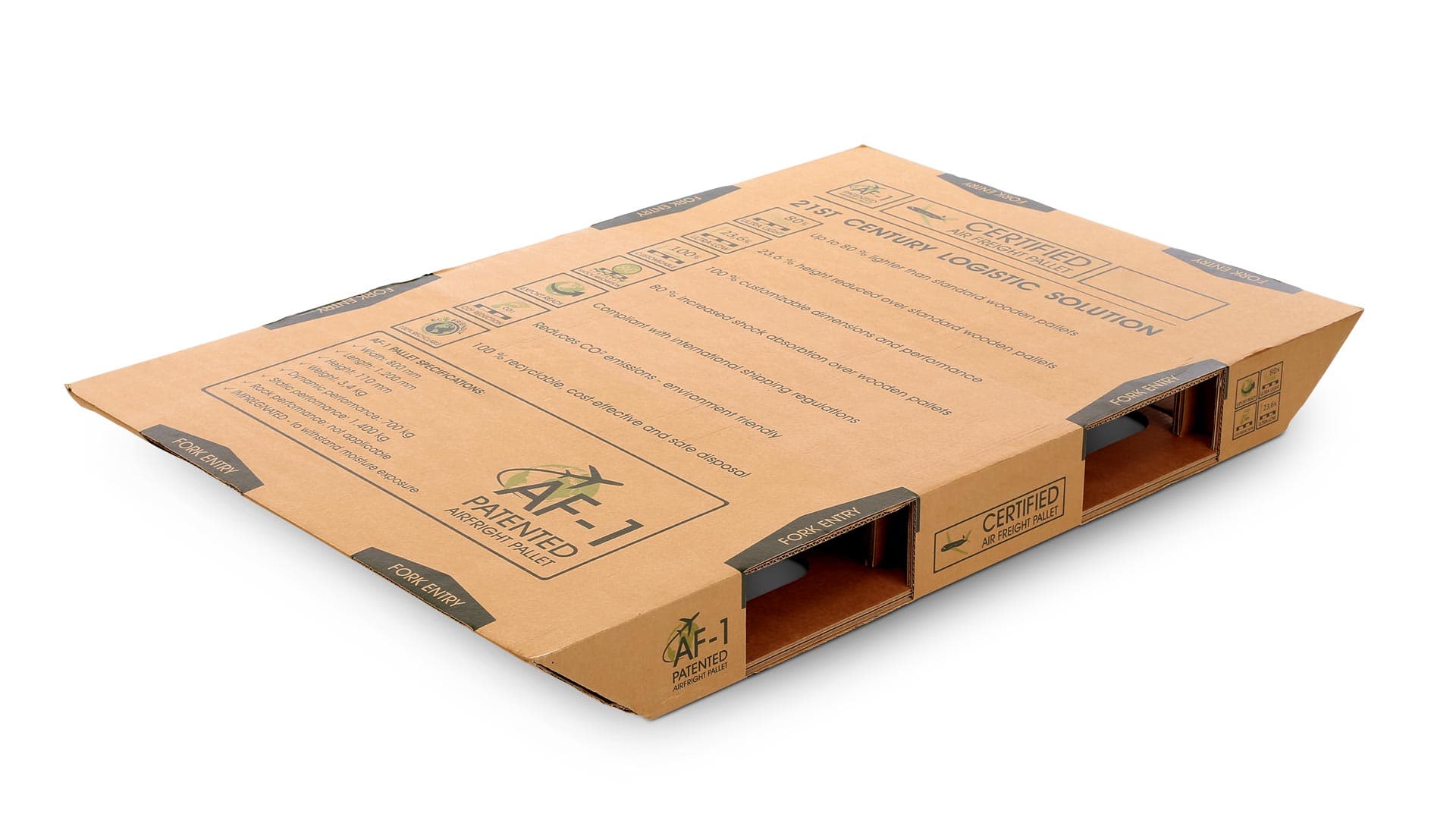
In 2017, KraftPal expanded its corrugated-pallet platform with an airfreight solution developed in collaboration with DHL, demonstrating how the technology could be adapted to specialized global logistics use cases.
Beyond a Single Pallet Model
Once the X-Pallet architecture had established a stronger structural foundation, KraftPal began extending the technology into specialized logistics applications. One of the most significant was airfreight.
Development With DHL
KraftPal's historical record states that the AF-1 airfreight pallet was developed in collaboration with DHL in 2017 for ULD aircraft-platform applications. The objective was to create a lightweight corrugated solution capable of satisfying demanding airfreight requirements while integrating into the company's automated production concept.
Why Airfreight Was Strategically Important
Weight carries direct economic significance in aviation. A pallet that reduces dead weight while maintaining functional performance can potentially influence payload efficiency, handling and transportation economics.
The airfreight use case therefore demonstrated an important characteristic of the broader KraftPal technology: the value proposition could change depending on the logistics environment. Sustainability, handling, hygiene, weight and total cost could combine differently across road, warehouse, export and airfreight applications.
Product Architecture Becomes a Platform
The AF-1 also showed that KraftPal was not developing one fixed replacement for a wooden pallet. The company was building a product architecture capable of producing standard and customized models around a common technology and manufacturing system.
External Recognition of the 2017 Development
Bloomberg Adria later referenced both the X-Pallet breakthrough and the development of the AF-1 with DHL when describing KraftPal's decade-long development and international growth. That independent retrospective is useful for the ZeeQuest archive because it confirms that these developments became recognized milestones in the company's industrial story.
A Lesson Carried Forward
The broader venture-building lesson is relevant to ZeeQuest today: disruptive technologies often become more valuable when the underlying platform can be adapted to multiple use cases rather than remaining a single-purpose product.
That principle - core technology, multiple applications, scalable commercialization - would later become central to the way ZeeQuest thinks about technology ecosystems.
← Previous Milestone: 2016-2017 - PalletKraft Evolves Into KraftPal as the X-Pallet Breakthrough Redefines the Technology
→ Next Milestone: 2018-2019 - KraftPal Moves From Product Innovation Toward an International Licensing Network